沽 (gū) means "To buy or sell" in Chinese. It has 8 strokes with the radical 氵, and is HSK Level 7.
Rated 3.7/5 in difficulty (challenging).
Harder than 28% of HSK Level 7 characters.
Appears in 3+ common words including 沽酒 (gū jiǔ), 沽名 (gū míng), 沽空 (gū kōng).
Due to its 8 strokes, Hanzi Writer's error detection shows 沽 requires focused practice — most learners need 10+ attempts for consistent accuracy.
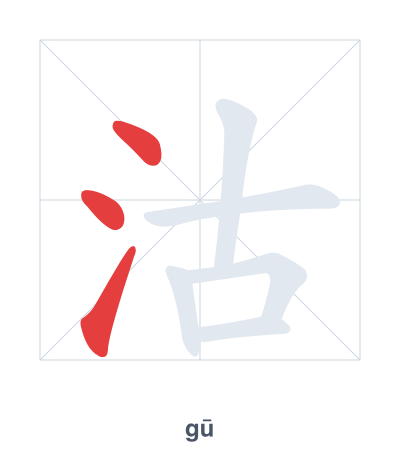
Open Hanzi Writer to see the animated stroke order and practice writing 沽 with real-time feedback.
The character 沽 (gū) is written with 8 strokes. Follow the standard Chinese stroke order: top to bottom, left to right, outside before inside. The radical 氵 is one of its key components.
Practice the correct stroke order with the Hanzi Writer app to see animated stroke-by-stroke guidance with real-time feedback.
沽 means To buy or sell.
As an HSK Level 7 character, 沽 is an intermediate-level character.
沽 is a phono-semantic compound combining the water radical (氵) with the phonetic component 古 (old). It originally referred to a specific river, but later came to mean to buy or sell, possibly from trade activities at river ports.
💡 Memory Tip: Picture an old (古) merchant selling water (氵) by the riverbank to thirsty travelers.
爷爷去集市上沽酒。
yé yé qù jí shì shàng gū jiǔ
Grandpa went to the market to buy wine.
他这样做只是为了沽名。
tā zhè yàng zuò zhǐ shì wèi le gū míng
He is doing this just to fish for fame.
投资者在市场上沽空。
tóu zī zhě zài shì chǎng shàng gū kōng
Investors are short-selling in the market.
Open Hanzi Writer to see the animated stroke order and practice writing 沽 with real-time feedback.
✨ Animated stroke order · Handwriting recognition · HSK-graded practice · Free to use
沽 is composed of the water radical 氵 on the left and 古 on the right. The water radical suggests a connection to liquids like wine, while 古 (meaning ‘ancient’) provides the sound and hints at old trading practices. Together, the character originally referred to buying or selling liquid goods, especially wine.