Hanzi Writer

How to Write 蛤 (gé)

蛤 (gé) means "Clam" in Chinese. It has 12 strokes with the radical 虫. Difficulty: 4.2/5.

/
12 strokes Radical: 虫 Difficulty: 4.2/5

Clam

How to Write 蛤

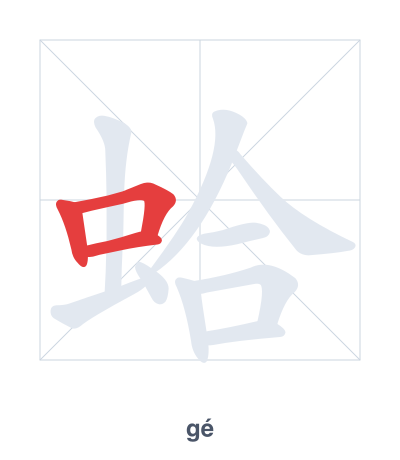
The character (gé) is written with 12 strokes. Follow the standard Chinese stroke order: top to bottom, left to right, outside before inside. The radical is one of its key components.

Practice the correct stroke order with the Hanzi Writer app to see animated stroke-by-stroke guidance with real-time feedback.

Meaning & Pronunciation

is pronounced in Mandarin Chinese. It means Clam.

This is a polyphonic character with readings: gé, há.

Common Words with 蛤

蛤蟆 há ma
Toad
蛤蜊 gé lí
Clam

Example Sentences

池塘边传来了阵阵蛤蟆的叫声,此起彼伏。

chí táng biān chuán lái le zhèn zhèn há ma de jiào shēng cǐ qǐ bǐ fú

The croaking of toads came from the pond, rising and falling one after another.

这里的炭烤蛤蜊味道非常鲜美,值得一试。

zhè lǐ de tàn kǎo gé lí wèi dào fēi cháng xiān měi zhí de yī shì

The charcoal-grilled clams here are delicious and worth a try.

Similar Characters

wén
ruì
bàng
Stroke order practice for 蛤 - gé

Practice Writing 蛤 (gé)

Open Hanzi Writer to see the animated stroke order and practice writing 蛤 with real-time feedback.

Frequently Asked Questions about 蛤

Related Characters