掂 (diān) means "to weigh in the hand" in Chinese. It has 11 strokes with the radical 扌.
Rated 4.2/5 in difficulty (advanced).
Appears in 3+ common words including 掂量 (diān liáng), 掂掂 (diān diān), 掂掇 (diān duō).
Due to its 11 strokes, Hanzi Writer's error detection shows 掂 requires focused practice — most learners need 10+ attempts for consistent accuracy.
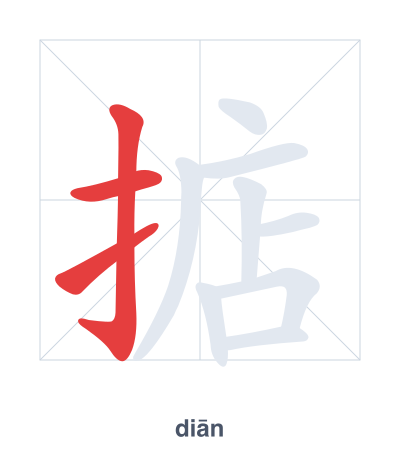
Open Hanzi Writer to see the animated stroke order and practice writing 掂 with real-time feedback.
The character 掂 (diān) is written with 11 strokes. Follow the standard Chinese stroke order: top to bottom, left to right, outside before inside. The radical 扌 is one of its key components.
Practice the correct stroke order with the Hanzi Writer app to see animated stroke-by-stroke guidance with real-time feedback.
掂 means to weigh in the hand.
掂 is a phono-semantic compound: the radical 扌 (hand) indicates the action is performed with the hand, while 店 (diàn, meaning 'shop') provides the pronunciation. The character suggests the motion of holding or testing the weight of an object in your hand, like a shopkeeper weighing goods.
💡 Memory Tip: Picture your hand (扌) holding up a tiny shop (店) to feel how heavy it is—you're literally 'weighing in the hand' whether the shop is too heavy to carry.
你掂量一下重量。
nǐ diān liáng yī xià zhòng liàng
Feel the weight of it.
拿在手里掂掂。
ná zài shǒu lǐ diān diān
Hold it in your hand to feel its weight.
凡事要掂掇一下。
fán shì yào diān duō yī xià
One should weigh things up in everything.
Open Hanzi Writer to see the animated stroke order and practice writing 掂 with real-time feedback.
✨ Animated stroke order · Handwriting recognition · HSK-graded practice · Free to use
掂 is composed of the radical 扌 (hand) on the left and 店 on the right. The hand radical indicates that the action involves the hand, while 店 (meaning "shop") provides the pronunciation. Together, they suggest the idea of holding something in your hand to judge its weight.