Hanzi Writer

How to Write 鞑 (dá) — Meaning “Tartar”

15 strokes Radical: 革

鞑 (dá) means "Tartar" in Chinese. It has 15 strokes with the radical 革.

Rated 4.2/5 in difficulty (advanced).

Appears in 3+ common words including 鞑靼 (dá dá), 鞑靼人 (dá dá rén), 鞑子 (dá zi).

Due to its 15 strokes, Hanzi Writer's error detection shows 鞑 requires focused practice — most learners need 10+ attempts for consistent accuracy.
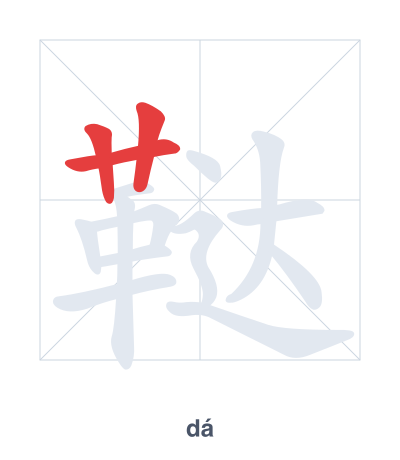
Stroke order practice for 鞑 - dá

Practice Writing 鞑 (dá)

Open Hanzi Writer to see the animated stroke order and practice writing 鞑 with real-time feedback.

The character (dá) is written with 15 strokes. Follow the standard Chinese stroke order: top to bottom, left to right, outside before inside. The radical is one of its key components.

Practice the correct stroke order with the Hanzi Writer app to see animated stroke-by-stroke guidance with real-time feedback.

means Tartar.

Character
Pinyindá (da)
MeaningTartar
Strokes15
Radical
Difficulty4.2/5

鞑 is a phonosemantic compound: the radical 革 (leather) hints at hide or leather goods—referring to the leather clothing and gear of the Tartar people—while 达 (dá) supplies the sound. Historically, this character was used to transcribe the name of the Tatar/Tartar tribes.

💡 Memory Tip: Picture a Tartar warrior stomping forward in a big leather boot (革) with a huge foot (达).

dá dá
Tatar
dá dá rén
Tatars
dá zi
Tartar (historical term)

鞑靼是一个古老的称呼。

dá dá shì yí gè gǔ lǎo de chēng hū

Tatar is an ancient name.

他在研究鞑靼人的历史。

tā zài yán jiū dá dá rén de lì shǐ

He is studying the history of the Tatars.

这是古代的一种说法。

zhè shì gǔ dài de yī zhǒng shuō fǎ

This is an ancient saying.

Character Pinyin Strokes Radical
(current) 15
jìn 13
xuē 13
13
Stroke order practice for 鞑 - dá

Practice Writing 鞑 (dá)

Open Hanzi Writer to see the animated stroke order and practice writing 鞑 with real-time feedback.

✨ Animated stroke order · Handwriting recognition · HSK-graded practice · Free to use

Frequently Asked Questions about 鞑

鞑 is made of two parts: the radical 革 (leather) on the left and the phonetic component 达 (dá) on the right. The leather radical hints at the nomadic Tartar peoples, who were known for using leather clothing and equipment. The phonetic 达 provides the pronunciation "dá."

Characters with Radical 革

Other 15-Stroke Characters