Hanzi Writer

How to Write 靼 (dá) — Meaning “Dressed leather”

14 strokes Radical: 革

靼 (dá) means "Dressed leather" in Chinese. It has 14 strokes with the radical 革.

Rated 4.2/5 in difficulty (advanced).

Appears in 3+ common words including 鞑靼 (dá dá), 靼子 (dá zi), 鞑靼人 (dá dá rén).

Due to its 14 strokes, Hanzi Writer's error detection shows 靼 requires focused practice — most learners need 10+ attempts for consistent accuracy.
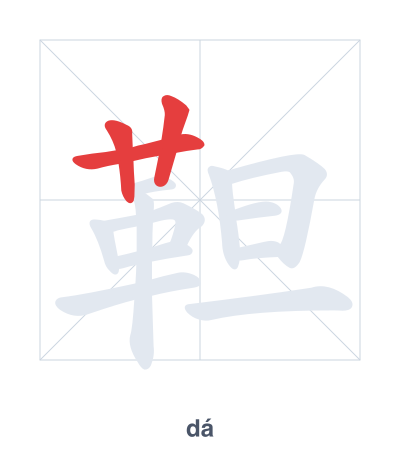
Stroke order practice for 靼 - dá

Practice Writing 靼 (dá)

Open Hanzi Writer to see the animated stroke order and practice writing 靼 with real-time feedback.

The character (dá) is written with 14 strokes. Follow the standard Chinese stroke order: top to bottom, left to right, outside before inside. The radical is one of its key components.

Practice the correct stroke order with the Hanzi Writer app to see animated stroke-by-stroke guidance with real-time feedback.

means Dressed leather.

Character
Pinyindá (da)
MeaningDressed leather
Strokes14
Radical
Difficulty4.2/5

靼 is a phono-semantic compound. The radical 革 (leather) signals that the character relates to animal hide, while 旦 (dàn, dawn) originally provided a phonetic hint (though the modern reading is dá). Together, they denote tanned or dressed leather—hide that has been processed and softened.

💡 Memory Tip: Picture a leather banner (革) unfurling at dawn (旦), its surface now smooth and dressed, ready for use.

dá dá
Tatar
dá zi
Tartar (historical term)
dá dá rén
Tatars

鞑靼牛肉很有名。

dá dá niú ròu hěn yǒu míng

Steak tartare is very famous.

他拿着一根靼子。

tā ná zhe yī gēn dá zi

He was holding a leather whip.

他在研究鞑靼人。

tā zài yán jiū dá dá rén

He is studying the Tatars.

Character Pinyin Strokes Radical
(current) 14
jìn 13
xuē 13
13
Stroke order practice for 靼 - dá

Practice Writing 靼 (dá)

Open Hanzi Writer to see the animated stroke order and practice writing 靼 with real-time feedback.

✨ Animated stroke order · Handwriting recognition · HSK-graded practice · Free to use

Frequently Asked Questions about 靼

The left side 革 is a radical meaning leather, which directly connects to the character's meaning of dressed or tanned leather. The right side 旦 (dàn) acts as a phonetic component, giving the character its pronunciation dá. Together, they form a character that describes processed leather.

Characters with Radical 革

Other 14-Stroke Characters