Hanzi Writer

How to Write 搽 (chá) — Meaning “apply / rub on”

chá 12 strokes Radical: 扌

搽 (chá) means "apply / rub on" in Chinese. It has 12 strokes with the radical 扌.

Rated 4.2/5 in difficulty (advanced).

Appears in 3+ common words including 搽药 (chá yào), 搽粉 (chá fěn), 搽油 (chá yóu).

Due to its 12 strokes, Hanzi Writer's error detection shows 搽 requires focused practice — most learners need 10+ attempts for consistent accuracy.
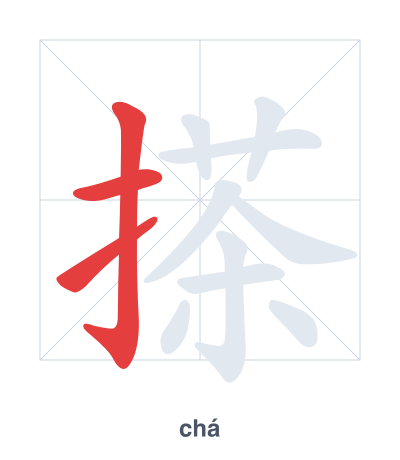
Stroke order practice for 搽 - chá

Practice Writing 搽 (chá)

Open Hanzi Writer to see the animated stroke order and practice writing 搽 with real-time feedback.

The character (chá) is written with 12 strokes. Follow the standard Chinese stroke order: top to bottom, left to right, outside before inside. The radical is one of its key components.

Practice the correct stroke order with the Hanzi Writer app to see animated stroke-by-stroke guidance with real-time feedback.

means apply / rub on.

Character
Pinyinchá (cha)
Meaningapply / rub on
Strokes12
Radical
Difficulty4.2/5

搽 is a phono-semantic compound: the radical 扌 (hand) indicates an action done with the hand, while 茶 (chá, 'tea') provides the pronunciation and hints at the original use of applying tea-based ointments or cosmetics by rubbing.

💡 Memory Tip: Imagine your hand (扌) rubbing tea (茶) leaves onto your skin to apply a soothing balm.

chá yào
apply medicine
chá fěn
apply powder
chá yóu
apply oil

记得按时搽药。

jì de àn shí chá yào

Remember to apply the ointment on time.

她在脸上搽粉。

tā zài liǎn shàng chá fěn

She is applying powder to her face.

皮肤干要搽油。

pí fū gàn yào chá yóu

Apply oil if the skin is dry.

Character Pinyin Strokes Radical
(current) chá 12
āi / ái 10
cuò 10
zhèn 10
Stroke order practice for 搽 - chá

Practice Writing 搽 (chá)

Open Hanzi Writer to see the animated stroke order and practice writing 搽 with real-time feedback.

✨ Animated stroke order · Handwriting recognition · HSK-graded practice · Free to use

Frequently Asked Questions about 搽

搽 combines the radical 扌 (hand) on the left with the phonetic component 茶 (chá, tea) on the right. The hand radical suggests an action performed by hand, like applying or rubbing. The phonetic part 茶 hints at the pronunciation chá but also relates to a creamy or powdery substance, as tea leaves can be ground into powder.

Characters with Radical 扌

Other 12-Stroke Characters