Hanzi Writer

How to Write 髀 (bì)

髀 (bì) means "thigh / femur" in Chinese. It has 17 strokes with the radical 骨. Difficulty: 4.2/5.

17 strokes Radical: 骨 Difficulty: 4.2/5

thigh / femur

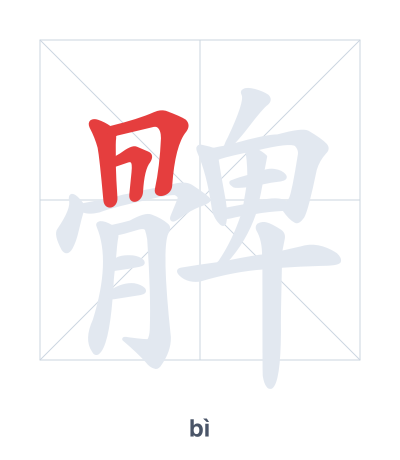
How to Write 髀

The character (bì) is written with 17 strokes. Follow the standard Chinese stroke order: top to bottom, left to right, outside before inside. The radical is one of its key components.

Practice the correct stroke order with the Hanzi Writer app to see animated stroke-by-stroke guidance with real-time feedback.

Meaning & Pronunciation

is pronounced in Mandarin Chinese. It means thigh / femur.

Common Words with 髀

髀骨 bì gǔ
femur / thigh bone
髀肉 bì ròu
flesh on the thighs
抚髀 fǔ bì
to slap one's thigh (in excitement or regret)

Example Sentences

髀骨就是大腿骨。

bì gǔ jiù shì dà tuǐ gǔ

The femur is the thigh bone.

他的髀肉增加了。

tā de bì ròu zēng jiā le

He has put on weight on his thighs.

他抚髀长叹一声。

tā fǔ bì cháng tàn yī shēng

He slapped his thigh and sighed deeply.

Similar Characters

hái
hóu
Stroke order practice for 髀 - bì

Practice Writing 髀 (bì)

Open Hanzi Writer to see the animated stroke order and practice writing 髀 with real-time feedback.

Frequently Asked Questions about 髀

Related Characters