Hanzi Writer

How to Write 拗 (ǎo)

拗 (ǎo) means "To bend / to snap / stubborn" in Chinese. It has 8 strokes with the radical 扌. Difficulty: 3.7/5.

ǎo / ào / niù
8 strokes Radical: 扌 Difficulty: 3.7/5

To bend / to snap / stubborn

How to Write 拗

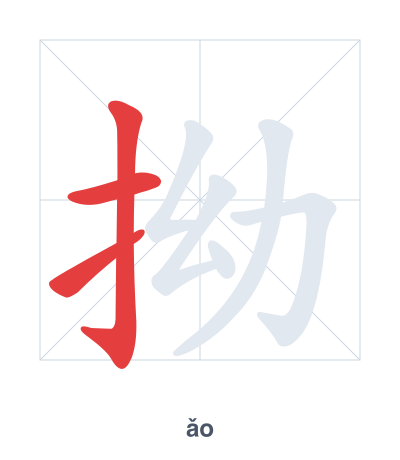
The character (ǎo) is written with 8 strokes. Follow the standard Chinese stroke order: top to bottom, left to right, outside before inside. The radical is one of its key components.

Practice the correct stroke order with the Hanzi Writer app to see animated stroke-by-stroke guidance with real-time feedback.

Meaning & Pronunciation

is pronounced ǎo in Mandarin Chinese. It means To bend / to snap / stubborn.

This is a polyphonic character with readings: ǎo, ào, niù.

Common Words with 拗

执拗 zhí niù
stubborn
别拗 bié ǎo
Don't be stubborn
拗口 ào kǒu
Hard to pronounce / tongue-twisting
违拗 wéi ào
To disobey; to go against.
拗断 ǎo duàn
To snap / to break by bending

Example Sentences

这孩子脾气太执拗,谁也劝不住。

zhè hái zi pí qì tài zhí niù shuí yě quàn bú zhù

This child is too stubborn; no one can talk him out of it.

他性子太别拗,很难与人合作。

tā xìng zi tài bié ǎo hěn nán yǔ rén hé zuò

He is too stubborn and difficult to work with.

这段绕口令读起来非常拗口。

zhè duàn rào kǒu lìng dú qǐ lái fēi cháng ào kǒu

This tongue twister is very difficult to say.

他不敢违拗长辈的意思。

tā bù gǎn wéi ào zhǎng bèi de yì si

He dared not go against the wishes of his elders.

Similar Characters

liè
tuō
gāng
Stroke order practice for 拗 - ǎo

Practice Writing 拗 (ǎo)

Open Hanzi Writer to see the animated stroke order and practice writing 拗 with real-time feedback.

Frequently Asked Questions about 拗

Related Characters