Hanzi Writer

How to Write 仃 (dīng) — Meaning “Alone or solitary”

dīng 4 strokes Radical: 亻

仃 (dīng) means "Alone or solitary" in Chinese. It has 4 strokes with the radical 亻.

Rated 2.4/5 in difficulty (moderate).

Appears in 3+ common words including 伶仃 (líng dīng), 仃立 (dīng lì), 仃伶 (dīng líng).

Hanzi Writer's stroke validation shows learners typically need 5-8 attempts to write 仃 with correct proportion and order.
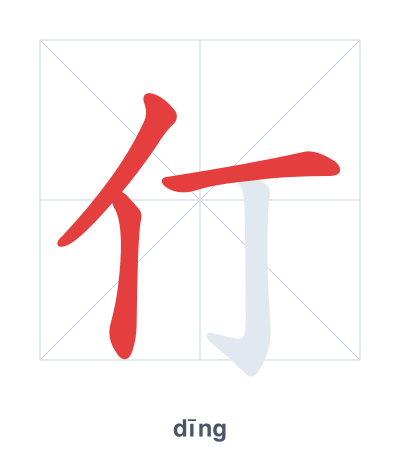
Stroke order practice for 仃 - dīng

Practice Writing 仃 (dīng)

Open Hanzi Writer to see the animated stroke order and practice writing 仃 with real-time feedback.

The character (dīng) is written with 4 strokes. Follow the standard Chinese stroke order: top to bottom, left to right, outside before inside. The radical is one of its key components.

Practice the correct stroke order with the Hanzi Writer app to see animated stroke-by-stroke guidance with real-time feedback.

means Alone or solitary.

Character
Pinyindīng (ding)
MeaningAlone or solitary
Strokes4
Radical
Difficulty2.4/5

仃 combines the radical 亻 (person) with 丁 (nail or peg). The image suggests a person standing alone and fixed in place, like a solitary nail. This compound conveys the idea of being isolated or solitary.

💡 Memory Tip: Picture a person (亻) standing alone like a lonely nail (丁) stuck in a wall.

líng dīng
lonely; solitary
dīng lì
To stand alone
dīng líng
Lonely and solitary

他一个人孤苦伶仃。

tā yí gè rén gū kǔ líng dīng

He is all alone and helpless.

他独自仃立在雨中。

tā dú zì dīng lì zài yǔ zhōng

He stood alone in the rain.

这个孩子很仃伶。

zhè ge hái zi hěn dīng líng

This child is very lonely and thin.

Character Pinyin Strokes Radical
(current) dīng 4
亿 3
shén / shí 4
rén 4
Stroke order practice for 仃 - dīng

Practice Writing 仃 (dīng)

Open Hanzi Writer to see the animated stroke order and practice writing 仃 with real-time feedback.

✨ Animated stroke order · Handwriting recognition · HSK-graded practice · Free to use

Frequently Asked Questions about 仃

仃 is composed of the radical 亻 (person) on the left and 丁 on the right. The radical shows it relates to a person, and 丁 adds sound, while the meaning ‘alone’ comes from the common word 伶仃, which describes a person standing alone.

Characters with Radical 亻

Other 4-Stroke Characters