Hanzi Writer

How to Write 葚 (rèn/shèn) — Meaning “mulberry fruit”

rèn/shèn 12 strokes Radical: 艹

葚 (rèn/shèn) means "mulberry fruit" in Chinese. It has 12 strokes with the radical 艹.

Rated 4.2/5 in difficulty (advanced).

Appears in 3+ common words including 桑葚 (sāng shèn), 葚子 (rèn zi), 采桑葚 (cǎi sāng rèn).

Due to its 12 strokes, Hanzi Writer's error detection shows 葚 requires focused practice — most learners need 10+ attempts for consistent accuracy.
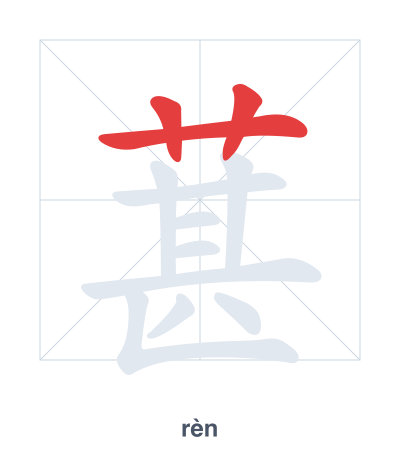
Stroke order practice for 葚 - rèn/shèn

Practice Writing 葚 (rèn/shèn)

Open Hanzi Writer to see the animated stroke order and practice writing 葚 with real-time feedback.

The character (rèn/shèn) is written with 12 strokes. Follow the standard Chinese stroke order: top to bottom, left to right, outside before inside. The radical is one of its key components.

Practice the correct stroke order with the Hanzi Writer app to see animated stroke-by-stroke guidance with real-time feedback.

means mulberry fruit.

This is a polyphonic character with readings: rèn, shèn.

Character
Pinyinrèn / shèn (ren/shen)
Meaningmulberry fruit
Strokes12
Radical
Difficulty4.2/5

葚 is a phono-semantic compound: the radical 艹 (grass/plant) indicates it is a type of plant or fruit, while 甚 (shèn, meaning 'excessive' but serving as a phonetic component) hints at the pronunciation 'rèn'. The character specifically refers to the sweet, dark fruit of the mulberry tree, often eaten fresh or dried.

💡 Memory Tip: Picture a mulberry tree where the top 艹 is the leafy branches, and the bottom 甚 looks like a drooping cluster of dark berries ready to pick.

sāng shèn
Mulberry fruit
rèn zi
mulberry fruit
cǎi sāng rèn
to pick mulberries

桑葚是紫色的。

sāng shèn shì zǐ sè de

Mulberries are purple.

树上有葚子。

shù shàng yǒu rèn zi

There are mulberries on the tree.

我们去采桑葚吧。

wǒ men qù cǎi sāng rèn ba

Let's go pick mulberries.

Character Pinyin Strokes Radical
(current) rèn / shèn 12
10
10
10
Stroke order practice for 葚 - rèn/shèn

Practice Writing 葚 (rèn/shèn)

Open Hanzi Writer to see the animated stroke order and practice writing 葚 with real-time feedback.

✨ Animated stroke order · Handwriting recognition · HSK-graded practice · Free to use

Frequently Asked Questions about 葚

葚 is made of the radical 艹 (grass or plant) on top, and 甚 (shèn) below. The 艹 indicates it is a plant-related word, while 甚 provides the sound and also hints at the idea of 'very' — mulberries are very sweet. Together, they form a character meaning mulberry fruit.

Characters with Radical 艹

Other 12-Stroke Characters