Hanzi Writer

How to Write 縻 (mí)

縻 (mí) means "to tie up" in Chinese. It has 17 strokes with the radical 糸. Difficulty: 4.2/5.

17 strokes Radical: 糸 Difficulty: 4.2/5

to tie up

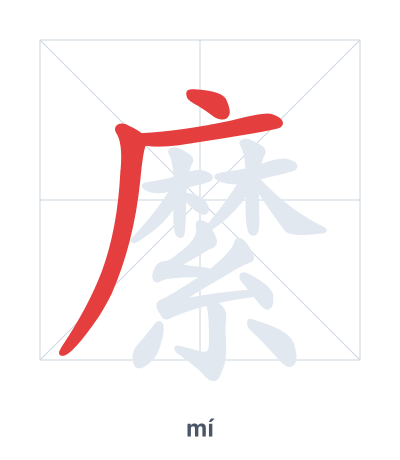
How to Write 縻

The character (mí) is written with 17 strokes. Follow the standard Chinese stroke order: top to bottom, left to right, outside before inside. The radical is one of its key components.

Practice the correct stroke order with the Hanzi Writer app to see animated stroke-by-stroke guidance with real-time feedback.

Meaning & Pronunciation

is pronounced in Mandarin Chinese. It means to tie up.

Common Words with 縻

羁縻 jī mí
To restrain; to control (historically used for frontier tribes)
縻费 mí fèi
to waste or squander
縻系 mí xì
to bind or tie up

Example Sentences

这种政策叫羁縻。

zhè zhǒng zhèng cè jiào jī mí

This policy is called 'Jimi' (a policy of loose rein).

不要縻费时间。

bú yào mí fèi shí jiān

Don't waste time.

两人关系有縻系。

liǎng rén guān xì yǒu mí xì

There is a bond between the two.

Similar Characters

cài
fán
yáo
Stroke order practice for 縻 - mí

Practice Writing 縻 (mí)

Open Hanzi Writer to see the animated stroke order and practice writing 縻 with real-time feedback.

Frequently Asked Questions about 縻

Related Characters