Hanzi Writer

How to Write 羚 (líng) — Meaning “antelope”

líng 11 strokes Radical: 羊

羚 (líng) means "antelope" in Chinese. It has 11 strokes with the radical 羊.

Rated 4.2/5 in difficulty (advanced).

Appears in 3+ common words including 羚羊 (líng yáng), 藏羚羊 (cáng líng yáng), 羚羊角 (líng yáng jiǎo).

Due to its 11 strokes, Hanzi Writer's error detection shows 羚 requires focused practice — most learners need 10+ attempts for consistent accuracy.
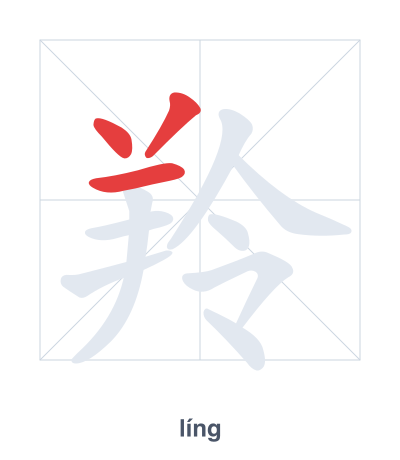
Stroke order practice for 羚 - líng

Practice Writing 羚 (líng)

Open Hanzi Writer to see the animated stroke order and practice writing 羚 with real-time feedback.

The character (líng) is written with 11 strokes. Follow the standard Chinese stroke order: top to bottom, left to right, outside before inside. The radical is one of its key components.

Practice the correct stroke order with the Hanzi Writer app to see animated stroke-by-stroke guidance with real-time feedback.

means antelope.

Character
Pinyinlíng (ling)
Meaningantelope
Strokes11
Radical
Difficulty4.2/5

羚 is a semantic-phonetic compound. The radical 羊 (sheep) hints that the character relates to a goat-like animal, while 令 (líng) supplies the pronunciation. Together they form the word for antelope, a swift horned animal similar to a goat.

💡 Memory Tip: Picture an antelope with a bell (令) around its neck, standing next to a sheep (羊) in a field.

líng yáng
antelope
cáng líng yáng
Tibetan antelope
líng yáng jiǎo
antelope horn

羚羊跑得很快。

líng yáng pǎo dé hěn kuài

Antelopes run very fast.

藏羚羊很珍贵。

cáng líng yáng hěn zhēn guì

Tibetan antelopes are very precious.

羚羊角可以入药。

líng yáng jiǎo kě yǐ rù yào

Antelope horn can be used as medicine.

Character Pinyin Strokes Radical
(current) líng 11
9
měi 9
gāo 10
Stroke order practice for 羚 - líng

Practice Writing 羚 (líng)

Open Hanzi Writer to see the animated stroke order and practice writing 羚 with real-time feedback.

✨ Animated stroke order · Handwriting recognition · HSK-graded practice · Free to use

Frequently Asked Questions about 羚

羚 combines the radical 羊 (sheep) on the left, which hints at animal-related meanings, with the component 令 on the right, which provides the sound líng. This makes 羚 a phono-semantic compound: the left side gives the general category (a hoofed animal), and the right side gives the pronunciation.

Characters with Radical 羊

Other 11-Stroke Characters