Hanzi Writer

How to Write 颌 (hé)

颌 (hé) means "jaw" in Chinese. It has 12 strokes with the radical 页. Difficulty: 4.2/5.

12 strokes Radical: 页 Difficulty: 4.2/5

jaw

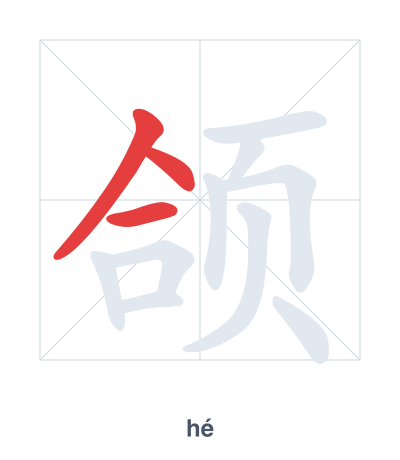
How to Write 颌

The character (hé) is written with 12 strokes. Follow the standard Chinese stroke order: top to bottom, left to right, outside before inside. The radical is one of its key components.

Practice the correct stroke order with the Hanzi Writer app to see animated stroke-by-stroke guidance with real-time feedback.

Meaning & Pronunciation

is pronounced in Mandarin Chinese. It means jaw.

Common Words with 颌

下颌 xià hé
lower jaw; mandible
上颌 shàng hé
upper jaw; maxilla
颌骨 hé gǔ
jawbone

Example Sentences

他的下颌很宽。

tā de xià hé hěn kuān

His lower jaw is very wide.

上颌骨在脸的上部。

shàng hé gǔ zài liǎn de shàng bù

The maxilla is located in the upper part of the face.

颌骨支撑着牙齿。

hé gǔ zhī chēng zhe yá chǐ

The jawbone supports the teeth.

Similar Characters

wán
Stroke order practice for 颌 - hé

Practice Writing 颌 (hé)

Open Hanzi Writer to see the animated stroke order and practice writing 颌 with real-time feedback.

Frequently Asked Questions about 颌

Related Characters