Hanzi Writer

How to Write 悴 (cuì)

悴 (cuì) means "haggard; worn out" in Chinese. It has 11 strokes with the radical 忄. Difficulty: 4.2/5.

cuì
11 strokes Radical: 忄 Difficulty: 4.2/5

haggard; worn out

How to Write 悴

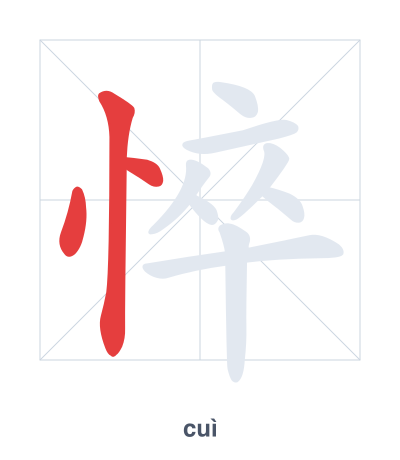
The character (cuì) is written with 11 strokes. Follow the standard Chinese stroke order: top to bottom, left to right, outside before inside. The radical is one of its key components.

Practice the correct stroke order with the Hanzi Writer app to see animated stroke-by-stroke guidance with real-time feedback.

Meaning & Pronunciation

is pronounced cuì in Mandarin Chinese. It means haggard; worn out.

Common Words with 悴

憔悴 qiáo cuì
haggard
悴然 cuì rán
looking haggard or sad
忧悴 yōu cuì
Haggard with worry

Example Sentences

他的脸色很憔悴。

tā de liǎn sè hěn qiáo cuì

He looks very haggard.

他看起来悴然不安。

tā kàn qǐ lái cuì rán bù ān

He looks haggard and uneasy.

他因家事而忧悴。

tā yīn jiā shì ér yōu cuì

He was haggard with worry over family matters.

Similar Characters

xún
shì
huǎng
Stroke order practice for 悴 - cuì

Practice Writing 悴 (cuì)

Open Hanzi Writer to see the animated stroke order and practice writing 悴 with real-time feedback.

Frequently Asked Questions about 悴

Related Characters