Hanzi Writer

How to Write 忏 (chàn) — Meaning “to repent; to confess”

chàn 6 strokes Radical: 忄

忏 (chàn) means "to repent; to confess" in Chinese. It has 6 strokes with the radical 忄.

Rated 3.2/5 in difficulty (challenging).

Appears in 3+ common words including 忏悔 (chàn huǐ), 忏悔录 (chàn huǐ lù), 忏悔心 (chàn huǐ xīn).

Due to its 6 strokes, Hanzi Writer's error detection shows 忏 requires focused practice — most learners need 10+ attempts for consistent accuracy.
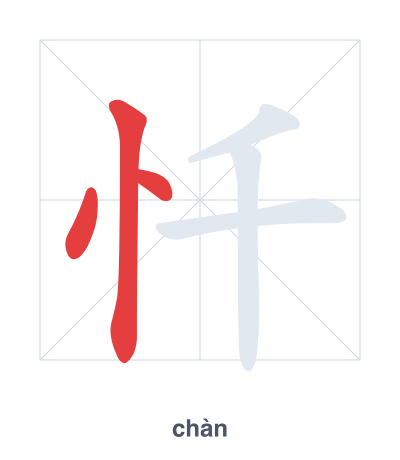
Stroke order practice for 忏 - chàn

Practice Writing 忏 (chàn)

Open Hanzi Writer to see the animated stroke order and practice writing 忏 with real-time feedback.

The character (chàn) is written with 6 strokes. Follow the standard Chinese stroke order: top to bottom, left to right, outside before inside. The radical is one of its key components.

Practice the correct stroke order with the Hanzi Writer app to see animated stroke-by-stroke guidance with real-time feedback.

means to repent; to confess.

Character
Pinyinchàn (chan)
Meaningto repent; to confess
Strokes6
Radical
Difficulty3.2/5

The character 忏 is a simplified form of 懺. It combines the heart radical (忄) with 千 (qiān, 'thousand') as a phonetic element, suggesting that sincere repentance involves heartfelt reflection repeated many times.

💡 Memory Tip: Picture a person with a thousand (千) regrets weighing heavily on their heart (忄), finally confessing to find relief.

chàn huǐ
to repent; to confess
chàn huǐ lù
Confessions
chàn huǐ xīn
Remorseful heart

他在真心忏悔。

tā zài zhēn xīn chàn huǐ

He is truly repenting.

我读了忏悔录。

wǒ dú le chàn huǐ lù

I read the Confessions.

他有一颗忏悔心。

tā yǒu yī kē chàn huǐ xīn

He has a repentant heart.

Character Pinyin Strokes Radical
(current) chàn 6
4
dāo 5
shì 6
Stroke order practice for 忏 - chàn

Practice Writing 忏 (chàn)

Open Hanzi Writer to see the animated stroke order and practice writing 忏 with real-time feedback.

✨ Animated stroke order · Handwriting recognition · HSK-graded practice · Free to use

Frequently Asked Questions about 忏

The character 忏 combines the radical 忄 (heart/mind) on the left with 千 (qiān, meaning thousand) on the right. The heart radical suggests emotion or inner feeling, and 千 here acts as a phonetic component indicating the pronunciation chàn. Together, they express the idea of heartfelt remorse or confession.

Characters with Radical 忄

Other 6-Stroke Characters