忡 (chōng) means "Worried; anxious" in Chinese. It has 7 strokes with the radical 忄.
Rated 3.5/5 in difficulty (challenging).
Appears in 3+ common words including 忧心忡忡 (yōu xīn chōng chōng), 忡忡 (chōng chōng), 忡然 (chōng rán).
Due to its 7 strokes, Hanzi Writer's error detection shows 忡 requires focused practice — most learners need 10+ attempts for consistent accuracy.
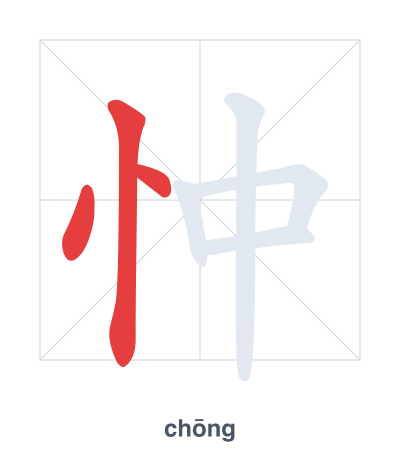
Open Hanzi Writer to see the animated stroke order and practice writing 忡 with real-time feedback.
The character 忡 (chōng) is written with 7 strokes. Follow the standard Chinese stroke order: top to bottom, left to right, outside before inside. The radical 忄 is one of its key components.
Practice the correct stroke order with the Hanzi Writer app to see animated stroke-by-stroke guidance with real-time feedback.
忡 means Worried; anxious.
忡 is a phono-semantic compound. The radical 忄 (heart) indicates it relates to emotions or feelings, while 中 (zhōng, meaning 'middle' or 'center') provides the pronunciation and suggests the idea of being stuck in the middle of worry. Together, the character depicts a heart burdened with anxiety at its core.
💡 Memory Tip: Picture a worried heart (忄) trapped right in the center (中) of a turbulent storm of anxiety.
他整天忧心忡忡的。
tā zhěng tiān yōu xīn chōng chōng de
He is heavy-hearted and worried all day.
他的神色忡忡。
tā de shén sè chōng chōng
His expression is full of anxiety.
听完后他忡然不乐。
tīng wán hòu tā chōng rán bù lè
He was unhappy and worried after hearing it.
Open Hanzi Writer to see the animated stroke order and practice writing 忡 with real-time feedback.
✨ Animated stroke order · Handwriting recognition · HSK-graded practice · Free to use
The character 忡 consists of the radical 忄 on the left, which represents the heart or emotions, and 中 on the right, which gives the pronunciation. Together, the heart radical signals that the character expresses a feeling, in this case worry or anxiety.