忕 (shì) means "Accustomed to" in Chinese. It has 6 strokes with the radical 忄.
Rated 3.2/5 in difficulty (challenging).
Appears in 3+ common words including 忕习 (shì xí), 忕行 (shì xíng), 忕好 (shì hǎo).
Due to its 6 strokes, Hanzi Writer's error detection shows 忕 requires focused practice — most learners need 10+ attempts for consistent accuracy.
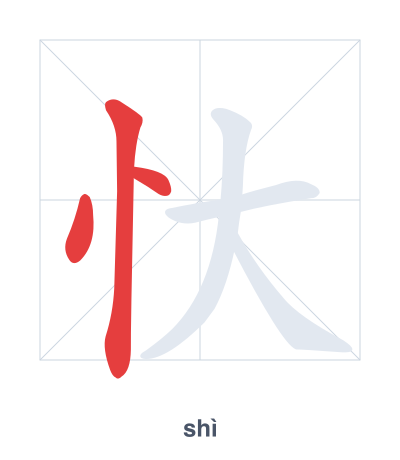
Open Hanzi Writer to see the animated stroke order and practice writing 忕 with real-time feedback.
The character 忕 (shì) is written with 6 strokes. Follow the standard Chinese stroke order: top to bottom, left to right, outside before inside. The radical 忄 is one of its key components.
Practice the correct stroke order with the Hanzi Writer app to see animated stroke-by-stroke guidance with real-time feedback.
忕 means Accustomed to.
忕 is a compound character formed from the heart radical 忄 (indicating emotion or habit) and the phonetic component 大 ('big'). The combination suggests a 'big heart' that is thoroughly used to or accustomed to something, reflecting a settled state of mind.
💡 Memory Tip: Imagine a giant heart (忄) so big (大) that it's accustomed to loving everything—no matter what, it's already used to it.
他忕习于这种生活。
tā shì xí yú zhè zhǒng shēng huó
He is accustomed to this kind of life.
这种忕行不可取。
zhè zhǒng shì xíng bù kě qǔ
This kind of habitual bad behavior is undesirable.
他有忕好的习惯。
tā yǒu shì hǎo de xí guàn
He has extravagant habits.
Open Hanzi Writer to see the animated stroke order and practice writing 忕 with real-time feedback.
✨ Animated stroke order · Handwriting recognition · HSK-graded practice · Free to use
忕 is composed of the radical 忄 (heart/mind) on the left and 大 (dà, big) on the right. The heart radical suggests the meaning relates to mental states or habits, while 大 implies something that has become big or established, together forming the idea of being accustomed to something. This structure makes sense because a strong habit is a mental pattern that has grown large.