Hanzi Writer

How to Write 恣 (zì) — Meaning “unrestrained”

10 strokes Radical: 心

恣 (zì) means "unrestrained" in Chinese. It has 10 strokes with the radical 心.

Rated 4.2/5 in difficulty (advanced).

Appears in 3+ common words including 恣意 (zì yì), 放恣 (fàng zì), 恣情 (zì qíng).

Due to its 10 strokes, Hanzi Writer's error detection shows 恣 requires focused practice — most learners need 10+ attempts for consistent accuracy.
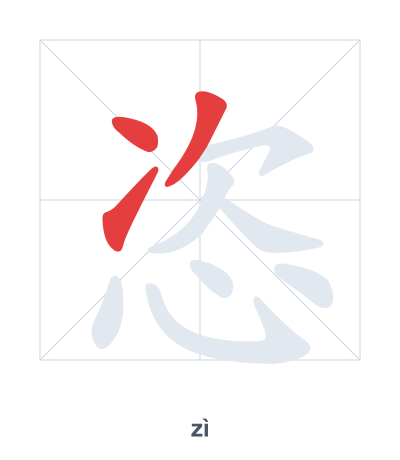
Stroke order practice for 恣 - zì

Practice Writing 恣 (zì)

Open Hanzi Writer to see the animated stroke order and practice writing 恣 with real-time feedback.

The character (zì) is written with 10 strokes. Follow the standard Chinese stroke order: top to bottom, left to right, outside before inside. The radical is one of its key components.

Practice the correct stroke order with the Hanzi Writer app to see animated stroke-by-stroke guidance with real-time feedback.

means unrestrained.

Character
Pinyinzì (zi)
Meaningunrestrained
Strokes10
Radical
Difficulty4.2/5

The character 恣 is a phono-semantic compound: the top part 次 (originally meaning 'next' or 'second') provides the phonetic cue (ancient pronunciation similar to zì), while the bottom radical 心 (heart/mind) adds the meaning. Together, they evoke the idea of letting the heart 'go next' without rules—acting on impulse, unrestrained.

💡 Memory Tip: Picture a wild heart (心) yelling 'I want the next (次) thing NOW!' and breaking free from all chains—that's unrestrained 恣.

zì yì
willfully
fàng zì
unbridled; wanton
zì qíng
to one's heart's content

他恣意妄为。

tā zì yì wàng wéi

He acts recklessly and does whatever he wants.

他的行为很放恣。

tā de xíng wéi hěn fàng zì

His behavior is very unrestrained.

大家恣情欢笑。

dà jiā zì qíng huān xiào

Everyone laughed to their heart's content.

Character Pinyin Strokes Radical
(current) 10
tiǎn 8
mín 8
zhōng 8
Stroke order practice for 恣 - zì

Practice Writing 恣 (zì)

Open Hanzi Writer to see the animated stroke order and practice writing 恣 with real-time feedback.

✨ Animated stroke order · Handwriting recognition · HSK-graded practice · Free to use

Frequently Asked Questions about 恣

恣 is composed of 次 (cì, meaning 'second' or 'next') on top and 心 (xīn, meaning 'heart') below. The heart component suggests emotion or desire, and the top part gives a phonetic hint to the pronunciation zì, together implying letting one's heart run freely without restraint.

Characters with Radical 心

Other 10-Stroke Characters