Hanzi Writer

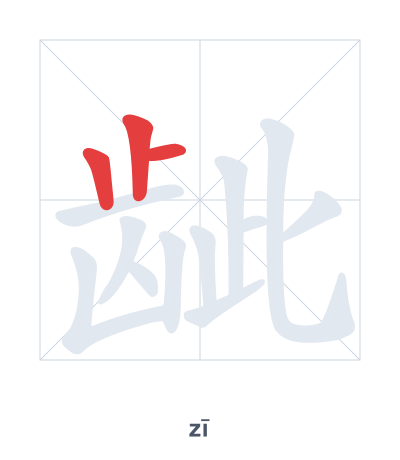
How to Write 龇 (zī)

龇 (zī) means "to show one's teeth; to bare teeth" in Chinese. It has 14 strokes with the radical 齿. Difficulty: 4.2/5.

14 strokes Radical: 齿 Difficulty: 4.2/5

to show one's teeth; to bare teeth

How to Write 龇

The character (zī) is written with 14 strokes. Follow the standard Chinese stroke order: top to bottom, left to right, outside before inside. The radical 齿 is one of its key components.

Practice the correct stroke order with the Hanzi Writer app to see animated stroke-by-stroke guidance with real-time feedback.

Meaning & Pronunciation

is pronounced in Mandarin Chinese. It means to show one's teeth; to bare teeth.

Common Words with 龇

龇牙 zī yá
to bare one's teeth
龇牙咧嘴 zī yá liě zuǐ
to grimace in pain; to bare one's teeth and make a face
龇着牙 zī zhe yá
baring one's teeth

Example Sentences

小狗对他龇牙。

xiǎo gǒu duì tā zī yá

The puppy bared its teeth at him.

他疼得龇牙咧嘴。

tā téng dé zī yá liě zuǐ

He grimaced in pain.

他龇着牙在笑。

tā zī zhe yá zài xiào

He is grinning and showing his teeth.

Similar Characters

líng
bāo
Stroke order practice for 龇 - zī

Practice Writing 龇 (zī)

Open Hanzi Writer to see the animated stroke order and practice writing 龇 with real-time feedback.

Frequently Asked Questions about 龇

Related Characters