龃 (jǔ) means "uneven teeth; to disagree" in Chinese. It has 13 strokes with the radical 齿.
Rated 4.2/5 in difficulty (advanced).
Appears in 3+ common words including 龃龉 (jǔ yǔ), 产生龃龉 (chǎn shēng jǔ yǔ), 消除龃龉 (xiāo chú jǔ yǔ).
Due to its 13 strokes, Hanzi Writer's error detection shows 龃 requires focused practice — most learners need 10+ attempts for consistent accuracy.
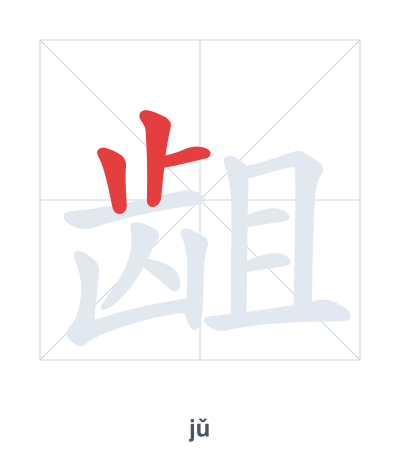
Open Hanzi Writer to see the animated stroke order and practice writing 龃 with real-time feedback.
The character 龃 (jǔ) is written with 13 strokes. Follow the standard Chinese stroke order: top to bottom, left to right, outside before inside. The radical 齿 is one of its key components.
Practice the correct stroke order with the Hanzi Writer app to see animated stroke-by-stroke guidance with real-time feedback.
龃 means uneven teeth; to disagree.
| Character | 龃 |
| Pinyin | jǔ (ju) |
| Meaning | uneven teeth; to disagree |
| Strokes | 13 |
| Radical | 齿 |
| Difficulty | 4.2/5 |
龃 is a phono-semantic compound with 齿 (teeth) as the meaning component and 且 as the phonetic. It originally depicted irregularly aligned teeth, and later extended figuratively to indicate disagreement or discord.
💡 Memory Tip: Picture a set of teeth (齿) with a wedge (且) stuck between them, making them uneven and causing disagreement.
他们之间有些龃龉。
tā men zhī jiān yǒu xiē jǔ yǔ
There is some friction between them.
两人产生了龃龉。
liǎng rén chǎn shēng le jǔ yǔ
A disagreement arose between the two.
我们要消除龃龉。
wǒ men yào xiāo chú jǔ yǔ
We need to resolve the friction.
Open Hanzi Writer to see the animated stroke order and practice writing 龃 with real-time feedback.
✨ Animated stroke order · Handwriting recognition · HSK-graded practice · Free to use
The left side is 齿, the radical for teeth, giving the character its connection to teeth. The right side is 且, which provides a phonetic hint for the pronunciation jǔ. Together, they form the idea of uneven teeth, which later extended to mean disagreement or discord.