絷 (zhí) means "to tie up; to fetter" in Chinese. It has 12 strokes with the radical 糸.
Rated 4.2/5 in difficulty (advanced).
Appears in 3+ common words including 絷维 (zhí wéi), 絷绊 (zhí bàn), 拘絷 (jū zhí).
Due to its 12 strokes, Hanzi Writer's error detection shows 絷 requires focused practice — most learners need 10+ attempts for consistent accuracy.
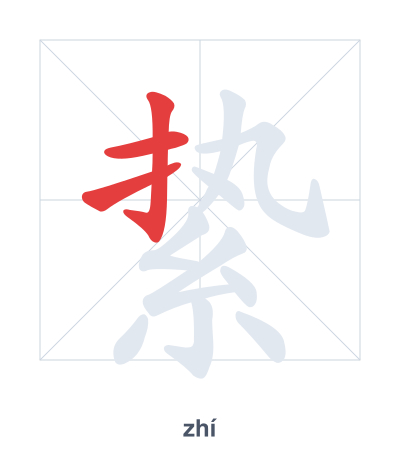
Open Hanzi Writer to see the animated stroke order and practice writing 絷 with real-time feedback.
The character 絷 (zhí) is written with 12 strokes. Follow the standard Chinese stroke order: top to bottom, left to right, outside before inside. The radical 糸 is one of its key components.
Practice the correct stroke order with the Hanzi Writer app to see animated stroke-by-stroke guidance with real-time feedback.
絷 means to tie up; to fetter.
| Character | 絷 |
| Pinyin | zhí (zhi) |
| Meaning | to tie up; to fetter |
| Strokes | 12 |
| Radical | 糸 |
| Difficulty | 4.2/5 |
This compound character combines 糸 (silk thread) with 執 (zhí, 'to capture' or 'hold'), which itself depicts a person with their hands in cuffs. Together, they visually represent binding a captive with silk cords, hence the meaning 'to tie up' or 'to fetter'.
💡 Memory Tip: Imagine a prisoner (執) with their hands and feet tightly wrapped in silk ropes (糸), completely unable to move.
双方关系有絷维。
shuāng fāng guān xì yǒu zhí wéi
There are ties connecting the two sides.
生活中有很多絷绊。
shēng huó zhōng yǒu hěn duō zhí bàn
There are many constraints and shackles in life.
他被拘絷了。
tā bèi jū zhí le
He was detained.
Open Hanzi Writer to see the animated stroke order and practice writing 絷 with real-time feedback.
✨ Animated stroke order · Handwriting recognition · HSK-graded practice · Free to use
The character 絷 is formed by the silk radical 糸 on the left and 執 on the right. 糸 represents thread or rope, while 執 means "to hold" or "to execute." Together they suggest using a silk rope to hold or bind something, giving the meaning of tying up or fettering.