Hanzi Writer

How to Write 吟 (yín) — Meaning “to chant / to recite”

yín 7 strokes Radical: 口

吟 (yín) means "to chant / to recite" in Chinese. It has 7 strokes with the radical 口.

Rated 3.5/5 in difficulty (challenging).

Appears in 3+ common words including 吟诵 (yín sòng), 吟唱 (yín chàng), 呻吟 (shēn yín).

Due to its 7 strokes, Hanzi Writer's error detection shows 吟 requires focused practice — most learners need 10+ attempts for consistent accuracy.
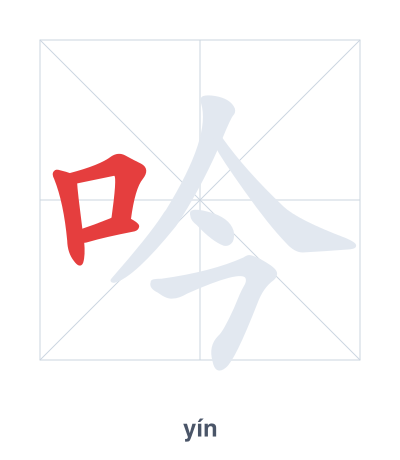
Stroke order practice for 吟 - yín

Practice Writing 吟 (yín)

Open Hanzi Writer to see the animated stroke order and practice writing 吟 with real-time feedback.

The character (yín) is written with 7 strokes. Follow the standard Chinese stroke order: top to bottom, left to right, outside before inside. The radical is one of its key components.

Practice the correct stroke order with the Hanzi Writer app to see animated stroke-by-stroke guidance with real-time feedback.

means to chant / to recite.

Character
Pinyinyín (yin)
Meaningto chant / to recite
Strokes7
Radical
Difficulty3.5/5

吟 is a compound character combining the mouth radical 口 (indicating speech or sound) with 今 (jīn, 'now' or 'present'), which serves as a phonetic component. Together, they evoke the idea of using one's mouth to produce rhythmic sounds in the present moment, connecting to the meaning 'to chant' or 'to recite'.

💡 Memory Tip: Imagine a mouth (口) repeating 'jin' (今) over and over like a chant, capturing the essence of reciting a poem right now.

yín sòng
to recite / to chant (poetry)
yín chàng
to chant / to sing
shēn yín
to groan / to moan

他在吟诵一首诗。

tā zài yín sòng yī shǒu shī

He is reciting a poem.

歌手在轻声吟唱。

gē shǒu zài qīng shēng yín chàng

The singer is singing softly.

他疼得大声呻吟。

tā téng dé dà shēng shēn yín

He groaned loudly in pain.

Character Pinyin Strokes Radical
(current) yín 7
5
5
gōu / jù 5
Stroke order practice for 吟 - yín

Practice Writing 吟 (yín)

Open Hanzi Writer to see the animated stroke order and practice writing 吟 with real-time feedback.

✨ Animated stroke order · Handwriting recognition · HSK-graded practice · Free to use

Frequently Asked Questions about 吟

吟 consists of the radical 口 (mouth) on the left and 今 (jīn, meaning 'now') on the right. The mouth component suggests the action involves speaking or sound, while 今 provides the pronunciation and hints at the idea of a present, rhythmic utterance. Together they create the meaning 'to chant or recite' — a vocal performance done in the moment.

Characters with Radical 口

Other 7-Stroke Characters