洫 (xù) means "Ditch; drain; moat" in Chinese. It has 9 strokes with the radical 氵.
Rated 4/5 in difficulty (challenging).
Appears in 3+ common words including 沟洫 (gōu xù), 洫水 (xù shuǐ), 城洫 (chéng xù).
Due to its 9 strokes, Hanzi Writer's error detection shows 洫 requires focused practice — most learners need 10+ attempts for consistent accuracy.
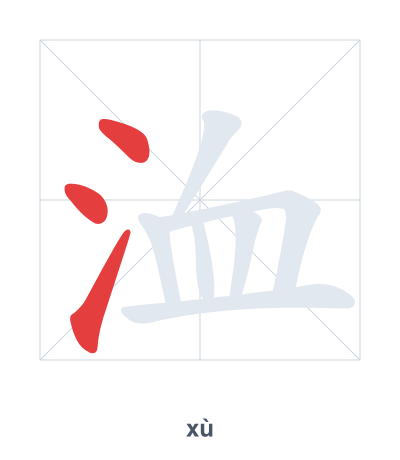
Open Hanzi Writer to see the animated stroke order and practice writing 洫 with real-time feedback.
The character 洫 (xù) is written with 9 strokes. Follow the standard Chinese stroke order: top to bottom, left to right, outside before inside. The radical 氵 is one of its key components.
Practice the correct stroke order with the Hanzi Writer app to see animated stroke-by-stroke guidance with real-time feedback.
洫 means Ditch; drain; moat.
洫 is a phono-semantic compound: the radical 氵 (water) indicates a water channel, and the component 血 (blood) hints at the pronunciation (xù). Together they represent a ditch or moat used to direct or contain water.
💡 Memory Tip: Imagine a ditch (氵) filled with blood-red water (血) forming a defensive moat around a fortress.
农民在清理田间的沟洫。
nóng mín zài qīng lǐ tián jiān de gōu xù
Farmers are cleaning the irrigation ditches in the fields.
洫水流进了菜地里。
xù shuǐ liú jìn le cài dì lǐ
The Xu River water flowed into the vegetable garden.
古城的城洫已经干涸了。
gǔ chéng de chéng xù yǐ jīng gān hé le
The moat of the ancient city has dried up.
Open Hanzi Writer to see the animated stroke order and practice writing 洫 with real-time feedback.
✨ Animated stroke order · Handwriting recognition · HSK-graded practice · Free to use
洫 is made of the water radical 氵 on the left and 血 (xuè, blood) on the right. The water radical suggests the meaning relates to water, while 血 may hint at a channel or trench in ancient contexts, together forming 'ditch' or 'moat'.