Hanzi Writer

How to Write 榭 (xiè) — Meaning “Pavilion on a terrace”

xiè 14 strokes Radical: 木

榭 (xiè) means "Pavilion on a terrace" in Chinese. It has 14 strokes with the radical 木.

Rated 4.2/5 in difficulty (advanced).

Appears in 3+ common words including 水榭 (shuǐ xiè), 舞榭 (wǔ xiè), 园林榭 (yuán lín xiè).

Due to its 14 strokes, Hanzi Writer's error detection shows 榭 requires focused practice — most learners need 10+ attempts for consistent accuracy.
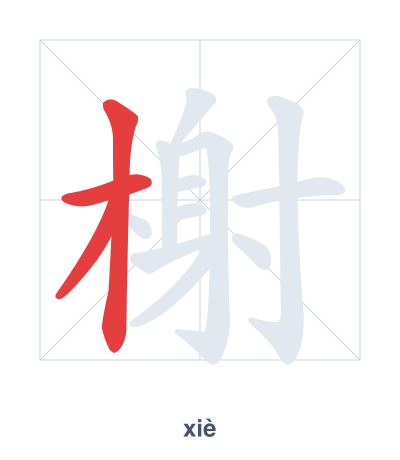
Stroke order practice for 榭 - xiè

Practice Writing 榭 (xiè)

Open Hanzi Writer to see the animated stroke order and practice writing 榭 with real-time feedback.

The character (xiè) is written with 14 strokes. Follow the standard Chinese stroke order: top to bottom, left to right, outside before inside. The radical is one of its key components.

Practice the correct stroke order with the Hanzi Writer app to see animated stroke-by-stroke guidance with real-time feedback.

means Pavilion on a terrace.

Character
Pinyinxiè (xie)
MeaningPavilion on a terrace
Strokes14
Radical
Difficulty4.2/5

The character 榭 is a compound of the radical 木 (wood, indicating the material of the structure) and the phonetic component 射 (shè, meaning 'to shoot'). Its meaning 'pavilion on a terrace' likely comes from ancient open-sided wooden buildings where archers practiced or guards kept watch.

💡 Memory Tip: Imagine a wooden pavilion (木) perched high on a terrace, where archers (射) take aim and shoot arrows from the balcony.

shuǐ xiè
Waterside pavilion
wǔ xiè
Dance pavilion
yuán lín xiè
Garden pavilion

水榭很美。

shuǐ xiè hěn měi

The waterside pavilion is beautiful.

这里的舞榭很大。

zhè lǐ de wǔ xiè hěn dà

The dance stage here is very large.

园林里有榭。

yuán lín lǐ yǒu xiè

There is a pavilion in the garden.

Character Pinyin Strokes Radical
(current) xiè 14
mián 12
12
gùn 12
Stroke order practice for 榭 - xiè

Practice Writing 榭 (xiè)

Open Hanzi Writer to see the animated stroke order and practice writing 榭 with real-time feedback.

✨ Animated stroke order · Handwriting recognition · HSK-graded practice · Free to use

Frequently Asked Questions about 榭

榭 is composed of the radical 木 (tree/wood) on the left and the phonetic component 射 (shè, to shoot) on the right. The wood radical indicates that a pavilion is typically built from wood, while 射 provides the sound clue. This structure shows that 榭 is a type of wooden structure used for leisure.

Characters with Radical 木

Other 14-Stroke Characters