潼 (tóng) means "high or lofty; name of a pass" in Chinese. It has 15 strokes with the radical 氵.
Rated 4.2/5 in difficulty (advanced).
Appears in 3+ common words including 潼关 (tóng guān), 潼南 (tóng nán), 潼潼 (tóng tóng).
Due to its 15 strokes, Hanzi Writer's error detection shows 潼 requires focused practice — most learners need 10+ attempts for consistent accuracy.
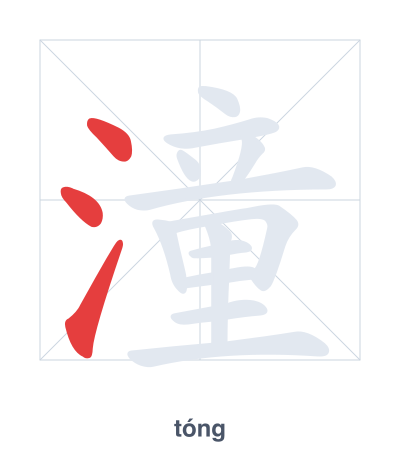
Open Hanzi Writer to see the animated stroke order and practice writing 潼 with real-time feedback.
The character 潼 (tóng) is written with 15 strokes. Follow the standard Chinese stroke order: top to bottom, left to right, outside before inside. The radical 氵 is one of its key components.
Practice the correct stroke order with the Hanzi Writer app to see animated stroke-by-stroke guidance with real-time feedback.
潼 means high or lofty; name of a pass.
潼 is a phono-semantic compound where 氵 (water) hints at a river near the famous Tong Pass, and 童 (tóng, 'child') provides the pronunciation. The pass's lofty, elevated position gave rise to the meaning 'high' or 'lofty.'
💡 Memory Tip: Picture a child (童) standing on a high mountain pass next to a flowing river (氵), feeling lofty and proud.
潼关是一个古城。
tóng guān shì yí gè gǔ chéng
Tongguan is an ancient city.
他出生在潼南。
tā chū shēng zài tóng nán
He was born in Tongnan.
潼潼是他的小名。
tóng tóng shì tā de xiǎo míng
Tongtong is his nickname.
Open Hanzi Writer to see the animated stroke order and practice writing 潼 with real-time feedback.
✨ Animated stroke order · Handwriting recognition · HSK-graded practice · Free to use
潼 combines the radical 氵 (water) on the left with 童 (tóng, child) on the right. The water radical suggests a river or flowing water, while 童 gives the sound and a hint of the pass's name. Historically, 潼关 is a famous mountain pass near the Yellow River, so water is linked to its geography.