Hanzi Writer

How to Write 溏 (táng) — Meaning “Semi-liquid; runny.”

táng 13 strokes Radical: 氵

溏 (táng) means "Semi-liquid; runny." in Chinese. It has 13 strokes with the radical 氵.

Rated 4.2/5 in difficulty (advanced).

Appears in 3+ common words including 溏心蛋 (táng xīn dàn), 溏心 (táng xīn), 溏便 (táng biàn).

Due to its 13 strokes, Hanzi Writer's error detection shows 溏 requires focused practice — most learners need 10+ attempts for consistent accuracy.
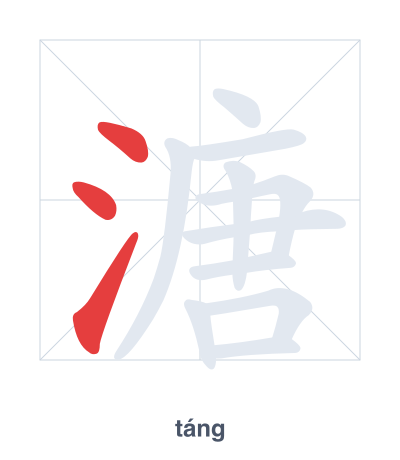
Stroke order practice for 溏 - táng

Practice Writing 溏 (táng)

Open Hanzi Writer to see the animated stroke order and practice writing 溏 with real-time feedback.

The character (táng) is written with 13 strokes. Follow the standard Chinese stroke order: top to bottom, left to right, outside before inside. The radical is one of its key components.

Practice the correct stroke order with the Hanzi Writer app to see animated stroke-by-stroke guidance with real-time feedback.

means Semi-liquid; runny..

Character
Pinyintáng (tang)
MeaningSemi-liquid; runny.
Strokes13
Radical
Difficulty4.2/5

溏 combines the water radical (氵) with the phonetic component 唐 (táng), which here suggests the sound and possibly a sense of 'diluted' or 'spread out.' The character describes a semi-liquid state, like runny egg yolks or watery stool, where the water radical directly conveys the liquid quality.

💡 Memory Tip: Imagine a grand hall (唐) flooded with water (氵), turning the floor into a sloshy, runny mess.

táng xīn dàn
Soft-boiled egg.
táng xīn
Runny yolk; soft-boiled center.
便 táng biàn
Loose stool; diarrhea.

我喜欢吃溏心蛋。

wǒ xǐ huān chī táng xīn dàn

I like eating soft-boiled eggs.

这个鸡蛋是溏心的。

zhè ge jī dàn shì táng xīn de

This egg is soft-boiled.

他今天有点溏便。

tā jīn tiān yǒu diǎn táng biàn

He has loose stools today.

Character Pinyin Strokes Radical
(current) táng 13
11
guàn 11
shuàn 11
Stroke order practice for 溏 - táng

Practice Writing 溏 (táng)

Open Hanzi Writer to see the animated stroke order and practice writing 溏 with real-time feedback.

✨ Animated stroke order · Handwriting recognition · HSK-graded practice · Free to use

Frequently Asked Questions about 溏

溏 is a left-right structure with the radical 氵 (water) on the left and 唐 (táng, meaning 'exaggerate') on the right. The water radical hints at liquids, while 唐 in this context suggests a softening or loosening, together meaning 'semi-liquid'.

Characters with Radical 氵

Other 13-Stroke Characters