Hanzi Writer

How to Write 孀 (shuāng)

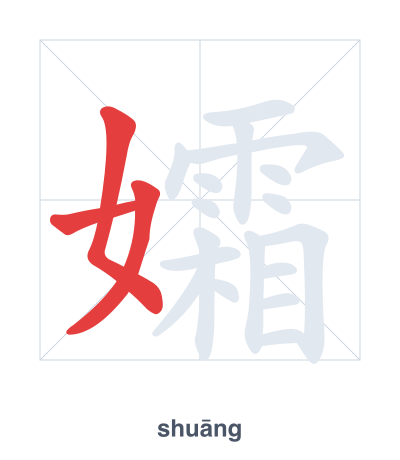
孀 (shuāng) means "Widow" in Chinese. It has 20 strokes with the radical 女. Difficulty: 3.8/5.

shuāng
20 strokes Radical: 女 Difficulty: 3.8/5

Widow

How to Write 孀

The character (shuāng) is written with 20 strokes. Follow the standard Chinese stroke order: top to bottom, left to right, outside before inside. The radical is one of its key components.

Practice the correct stroke order with the Hanzi Writer app to see animated stroke-by-stroke guidance with real-time feedback.

Meaning & Pronunciation

is pronounced shuāng in Mandarin Chinese. It means Widow.

Common Words with 孀

孀妇 shuāng fù
Widow
孤孀 gū shuāng
widow
守孀 shǒu shuāng
To remain a widow.

Example Sentences

她是一位孀妇。

tā shì yī wèi shuāng fù

She is a widow.

照顾这些孤孀。

zhào gù zhè xiē gū shuāng

Take care of these widows and orphans.

她在老家守孀。

tā zài lǎo jiā shǒu shuāng

She is living as a widow in her hometown.

Stroke order practice for 孀 - shuāng

Practice Writing 孀 (shuāng)

Open Hanzi Writer to see the animated stroke order and practice writing 孀 with real-time feedback.

Frequently Asked Questions about 孀

Related Characters