氆 (pǔ) means "pulu (Tibetan wool)" in Chinese. It has 16 strokes with the radical 毛.
Rated 4.2/5 in difficulty (advanced).
Appears in 3+ common words including 氆氇 (pǔ lu), 织氆 (zhī pǔ), 氆氇衫 (pǔ lu shān).
Due to its 16 strokes, Hanzi Writer's error detection shows 氆 requires focused practice — most learners need 10+ attempts for consistent accuracy.
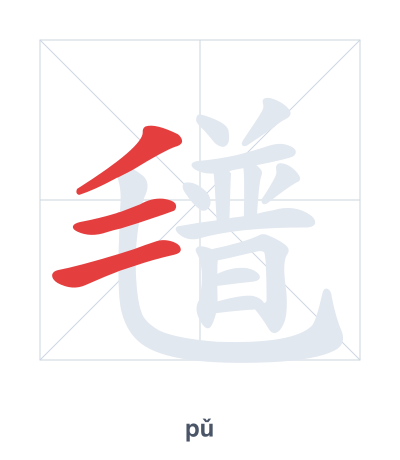
Open Hanzi Writer to see the animated stroke order and practice writing 氆 with real-time feedback.
The character 氆 (pǔ) is written with 16 strokes. Follow the standard Chinese stroke order: top to bottom, left to right, outside before inside. The radical 毛 is one of its key components.
Practice the correct stroke order with the Hanzi Writer app to see animated stroke-by-stroke guidance with real-time feedback.
氆 means pulu (Tibetan wool).
| Character | 氆 |
| Pinyin | pǔ (pu) |
| Meaning | pulu (Tibetan wool) |
| Strokes | 16 |
| Radical | 毛 |
| Difficulty | 4.2/5 |
氆 is a phono-semantic compound: the radical 毛 (hair/wool) indicates the fabric/material, and 普 (pǔ, meaning 'general' or 'widespread') provides the pronunciation. It specifically denotes pulu, a coarse woolen fabric traditionally woven in Tibet.
💡 Memory Tip: Picture a Tibetan general (普) wrapped in a thick wool (毛) blanket—this special wool is called pulu.
氆氇是西藏的特产。
pǔ lu shì xī zàng de tè chǎn
Pulu is a specialty of Tibet.
她们在织氆。
tā men zài zhī pǔ
They are weaving Pulu (Tibetan wool fabric).
他穿着一件氆氇衫。
tā chuān zhe yī jiàn pǔ lu shān
He is wearing a Tibetan wool shirt.
Open Hanzi Writer to see the animated stroke order and practice writing 氆 with real-time feedback.
✨ Animated stroke order · Handwriting recognition · HSK-graded practice · Free to use
氆 is formed by the radical 毛 (wool) on the left and the phonetic component 普 (pǔ) on the right. The radical 毛 indicates that the character relates to wool or fabric, while 普 provides the pronunciation. Together, they create a character meaning a specific type of wool fabric from Tibet.