氅 (chǎng) means "cloak / overcoat" in Chinese. It has 16 strokes with the radical 毛.
Rated 4.2/5 in difficulty (advanced).
Appears in 3+ common words including 大氅 (dà chǎng), 鹤氅 (hè chǎng), 披氅 (pī chǎng).
Due to its 16 strokes, Hanzi Writer's error detection shows 氅 requires focused practice — most learners need 10+ attempts for consistent accuracy.
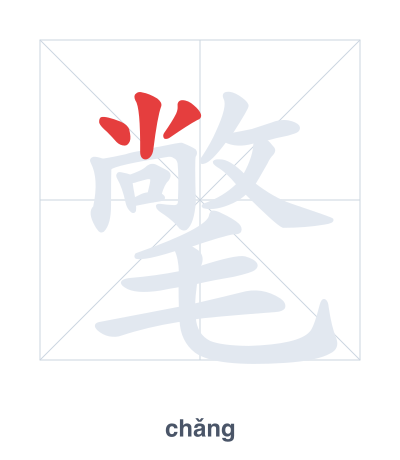
Open Hanzi Writer to see the animated stroke order and practice writing 氅 with real-time feedback.
The character 氅 (chǎng) is written with 16 strokes. Follow the standard Chinese stroke order: top to bottom, left to right, outside before inside. The radical 毛 is one of its key components.
Practice the correct stroke order with the Hanzi Writer app to see animated stroke-by-stroke guidance with real-time feedback.
氅 means cloak / overcoat.
| Character | 氅 |
| Pinyin | chǎng (chang) |
| Meaning | cloak / overcoat |
| Strokes | 16 |
| Radical | 毛 |
| Difficulty | 4.2/5 |
氅 is a phono-semantic compound: the top part 敝 (bì) provides a phonetic hint, while the bottom 毛 (hair/feathers) indicates the material, originally a cloak made of bird feathers or animal fur.
💡 Memory Tip: Picture a fur coat (毛) with a ragged, flapping edge (the shape of 敝 above) that billows like wings as you wear it against the cold.
他穿了一件大氅。
tā chuān le yī jiàn dà chǎng
He wore a heavy cloak.
古人常穿鹤氅。
gǔ rén cháng chuān hè chǎng
Ancient people often wore cloaks made of crane feathers.
她披氅出门去了。
tā pī chǎng chū mén qù le
She went out wearing a cloak.
Open Hanzi Writer to see the animated stroke order and practice writing 氅 with real-time feedback.
✨ Animated stroke order · Handwriting recognition · HSK-graded practice · Free to use
氅 is a phono-semantic compound: the top part 敞 (chǎng) provides the sound, and the bottom radical 毛 (hair/feathers) gives the meaning. Since cloaks were often made from animal fur or bird feathers, 毛 directly connects to the garment's material.