Hanzi Writer

How to Write 昵 (nì) — Meaning “Intimate / Close”

9 strokes Radical: 日

昵 (nì) means "Intimate / Close" in Chinese. It has 9 strokes with the radical 日.

Rated 4/5 in difficulty (challenging).

Appears in 3+ common words including 昵称 (nì chēng), 亲昵 (qīn nì), 昵近 (nì jìn).

Due to its 9 strokes, Hanzi Writer's error detection shows 昵 requires focused practice — most learners need 10+ attempts for consistent accuracy.
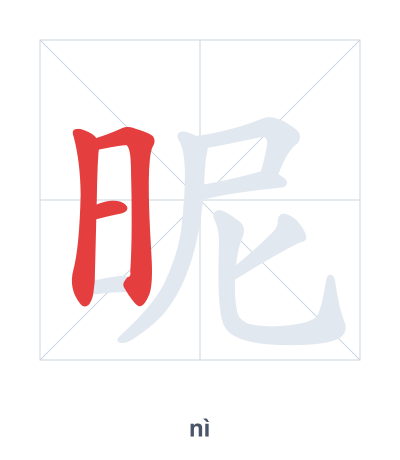
Stroke order practice for 昵 - nì

Practice Writing 昵 (nì)

Open Hanzi Writer to see the animated stroke order and practice writing 昵 with real-time feedback.

The character (nì) is written with 9 strokes. Follow the standard Chinese stroke order: top to bottom, left to right, outside before inside. The radical is one of its key components.

Practice the correct stroke order with the Hanzi Writer app to see animated stroke-by-stroke guidance with real-time feedback.

means Intimate / Close.

Character
Pinyinnì (ni)
MeaningIntimate / Close
Strokes9
Radical
Difficulty4/5

昵 is a phonetic-semantic compound: the radical 日 (sun/day) suggests daily warmth, while 尼 (ní) acts as a phonetic and originally depicted two people close together (尸 person + 匕 reversed person), adding the meaning of closeness. Together, they convey intimacy like the sun’s daily familiarity or people huddling near each other.

💡 Memory Tip: Picture the sun (日) hanging low beside two people huddled closely (尼, like a nun and a person) — that’s how intimate they are.

nì chēng
Nickname
qīn nì
intimate; affectionate
nì jìn
To be close with / Intimate

你的昵称是什么?

nǐ de nì chēng shì shén me

What is your nickname?

他们举止亲昵。

tā men jǔ zhǐ qīn nì

They behave intimately.

两人关系很昵近。

liǎng rén guān xì hěn nì jìn

The two have a very close relationship.

Character Pinyin Strokes Radical
(current) 9
gàn 7
hàn 7
tái 7
Stroke order practice for 昵 - nì

Practice Writing 昵 (nì)

Open Hanzi Writer to see the animated stroke order and practice writing 昵 with real-time feedback.

✨ Animated stroke order · Handwriting recognition · HSK-graded practice · Free to use

Frequently Asked Questions about 昵

昵 is made of the radical 日 (sun) on the left and 尼 on the right. 尼 gives the pronunciation nì, while 日 suggests a bright, daily connection, hinting at the idea of closeness or familiarity like something you see every day.

Characters with Radical 日

Other 9-Stroke Characters