浼 (měi) means "To request" in Chinese. It has 10 strokes with the radical 氵.
Rated 4.2/5 in difficulty (advanced).
Appears in 3+ common words including 浼托 (měi tuō), 浼浼 (měi měi), 浼及 (měi jí).
Due to its 10 strokes, Hanzi Writer's error detection shows 浼 requires focused practice — most learners need 10+ attempts for consistent accuracy.
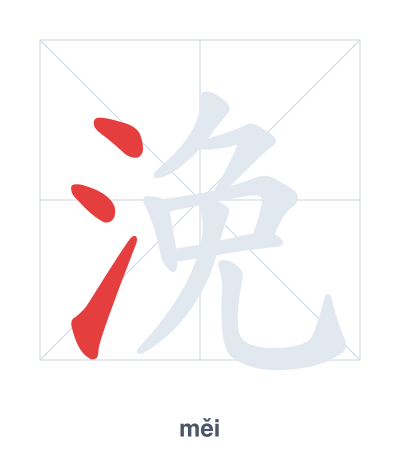
Open Hanzi Writer to see the animated stroke order and practice writing 浼 with real-time feedback.
The character 浼 (měi) is written with 10 strokes. Follow the standard Chinese stroke order: top to bottom, left to right, outside before inside. The radical 氵 is one of its key components.
Practice the correct stroke order with the Hanzi Writer app to see animated stroke-by-stroke guidance with real-time feedback.
浼 means To request.
浼 is a phono-semantic compound: the water radical (氵) hints at its original meaning 'to defile' (related to dirty water), while 免 (miǎn) provides the sound. Over time, it was borrowed phonetically to mean 'to request'.
💡 Memory Tip: Picture a person (免) standing by a river (氵) politely requesting a sip of water.
我浼托他办件事。
wǒ měi tuō tā bàn jiàn shì
I asked him to do something for me.
河水浼浼地流。
hé shuǐ měi měi dì liú
The river water flows smoothly and copiously.
不要浼及他人。
bú yào měi jí tā rén
Don't involve or implicate others.
Open Hanzi Writer to see the animated stroke order and practice writing 浼 with real-time feedback.
✨ Animated stroke order · Handwriting recognition · HSK-graded practice · Free to use
The character 浼 combines the water radical 氵 on the left and 每 on the right. The water radical hints at its original meaning related to flowing water, as seen in the word 浼浼 (měi měi) meaning flowing water. The character later came to mean "to request" through extended use, and the water element helps remember its connection to the word for flowing water.