瞵 (lín) means "to stare at; to gaze" in Chinese. It has 17 strokes with the radical 目.
Rated 4.2/5 in difficulty (advanced).
Appears in 3+ common words including 瞵视 (lín shì), 瞵盼 (lín pàn), 瞵瞵 (lín lín).
Due to its 17 strokes, Hanzi Writer's error detection shows 瞵 requires focused practice — most learners need 10+ attempts for consistent accuracy.
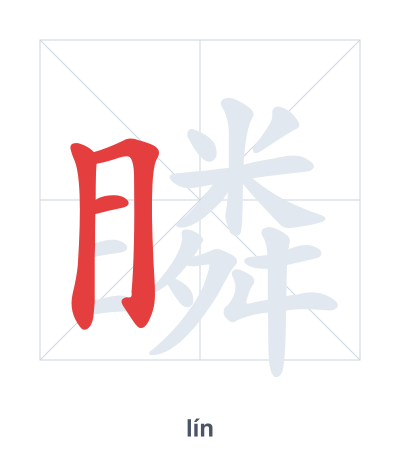
Open Hanzi Writer to see the animated stroke order and practice writing 瞵 with real-time feedback.
The character 瞵 (lín) is written with 17 strokes. Follow the standard Chinese stroke order: top to bottom, left to right, outside before inside. The radical 目 is one of its key components.
Practice the correct stroke order with the Hanzi Writer app to see animated stroke-by-stroke guidance with real-time feedback.
瞵 means to stare at; to gaze.
瞵 is a phono-semantic compound. The radical 目 (eye) indicates the meaning relates to vision, while the phonetic component 粦 (lín) suggests the sound and also evokes the idea of a flickering glow (as in fireflies or phosphorus), hinting at an intense, penetrating stare.
💡 Memory Tip: Imagine your eye (目) staring so hard at a flickering firefly (粦) that you cannot blink.
他瞵视着四周。
tā lín shì zhe sì zhōu
He glared around at his surroundings.
他左右瞵盼。
tā zuǒ yòu lín pàn
He looked around from side to side.
他的目光瞵瞵。
tā de mù guāng lín lín
His gaze was staring and glaring.
Open Hanzi Writer to see the animated stroke order and practice writing 瞵 with real-time feedback.
✨ Animated stroke order · Handwriting recognition · HSK-graded practice · Free to use
The left side is 目, the radical for eye, which connects to the meaning of looking. The right side is 粦 (lín), which gives the character its pronunciation. Together, 目 + 粦 means 'to stare or gaze intently'.