粱 (liáng) means "Sorghum; fine grain." in Chinese. It has 13 strokes with the radical 米.
Rated 4.2/5 in difficulty (advanced).
Appears in 3+ common words including 高粱 (gāo liáng), 黄粱一梦 (huáng liáng yī mèng), 膏粱 (gāo liáng).
Due to its 13 strokes, Hanzi Writer's error detection shows 粱 requires focused practice — most learners need 10+ attempts for consistent accuracy.
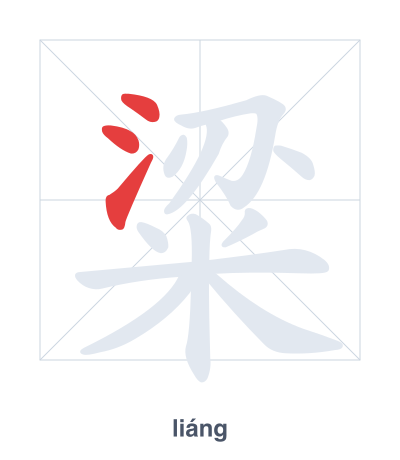
Open Hanzi Writer to see the animated stroke order and practice writing 粱 with real-time feedback.
The character 粱 (liáng) is written with 13 strokes. Follow the standard Chinese stroke order: top to bottom, left to right, outside before inside. The radical 米 is one of its key components.
Practice the correct stroke order with the Hanzi Writer app to see animated stroke-by-stroke guidance with real-time feedback.
粱 means Sorghum; fine grain..
The character 粱 is a phono-semantic compound combining the semantic component 米 (grain) with the phonetic component 梁 (liáng, meaning 'beam' or 'bridge'). The tall stalks of sorghum resemble beams, and 米 specifies it's a grain.
💡 Memory Tip: Picture a beam (梁) made of sorghum stalks supporting a heap of grain (米) — that's 粱.
高粱可以用来酿酒。
gāo liáng kě yǐ yòng lái niàng jiǔ
Sorghum can be used to make wine.
一切繁华不过是黄粱一梦。
yī qiè fán huá bù guò shì huáng liáng yī mèng
All prosperity is but a fleeting dream.
他过着膏粱子弟的生活。
tā guò zhe gāo liáng zǐ dì de shēng huó
He lives the life of a pampered child of wealth.
Open Hanzi Writer to see the animated stroke order and practice writing 粱 with real-time feedback.
✨ Animated stroke order · Handwriting recognition · HSK-graded practice · Free to use
粱 is made of 米 (rice radical) on the left and 梁 (liáng, meaning beam) on the right. The 米 radical shows it is a type of grain, while 梁 gives the sound and hints at the tall, beam-like stalks of sorghum plants. Together they mean sorghum or fine grain.