樆 (lí) means "Wild pear" in Chinese. It has 14 strokes with the radical 木.
Rated 4.2/5 in difficulty (advanced).
Appears in 3+ common words including 樆木 (lí mù), 樆子 (lí zi), 樆枣 (lí zǎo).
Due to its 14 strokes, Hanzi Writer's error detection shows 樆 requires focused practice — most learners need 10+ attempts for consistent accuracy.
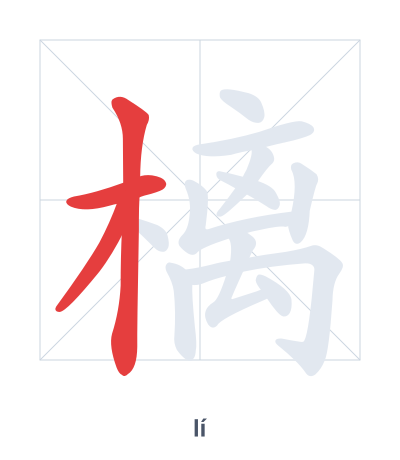
Open Hanzi Writer to see the animated stroke order and practice writing 樆 with real-time feedback.
The character 樆 (lí) is written with 14 strokes. Follow the standard Chinese stroke order: top to bottom, left to right, outside before inside. The radical 木 is one of its key components.
Practice the correct stroke order with the Hanzi Writer app to see animated stroke-by-stroke guidance with real-time feedback.
樆 means Wild pear.
樆 is a phono-semantic compound combining the tree radical 木 (mù) with 离 (lí), which provides the sound. The radical signals that this character refers to a type of tree—the wild pear.
💡 Memory Tip: Imagine a wild pear tree (木) that magically 'leaves' (离) its fruit behind when you walk past.
这种樆木很名贵。
zhè zhǒng lí mù hěn míng guì
This Limu wood is very precious.
樆子是一种野果。
lí zi shì yī zhǒng yě guǒ
The wild pear is a type of wild fruit.
樆枣的味道很甜。
lí zǎo de wèi dào hěn tián
The wild jujube tastes very sweet.
Open Hanzi Writer to see the animated stroke order and practice writing 樆 with real-time feedback.
✨ Animated stroke order · Handwriting recognition · HSK-graded practice · Free to use
樆 combines the radical 木 (tree) on the left with 离 (lí) on the right. The 木 radical clearly shows it is a type of tree, while 离 gives the sound and also hints at 'leaving' or 'separating' — wild pear trees often grow apart from cultivated orchards.