呃 (e/è) means "uh; um; (medical) hiccup" in Chinese. It has 7 strokes with the radical 口.
Rated 3.5/5 in difficulty (challenging).
Appears in 3+ common words including 呃逆 (è nì), 呃 (è), 打呃 (dǎ e).
Due to its 7 strokes, Hanzi Writer's error detection shows 呃 requires focused practice — most learners need 10+ attempts for consistent accuracy.
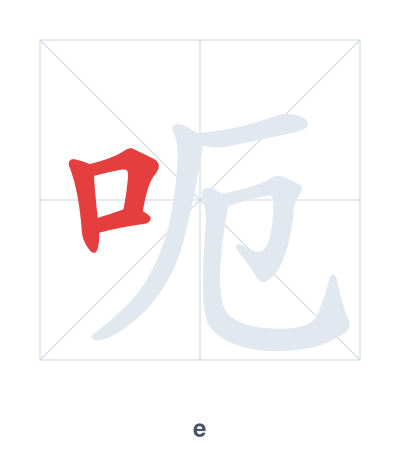
Open Hanzi Writer to see the animated stroke order and practice writing 呃 with real-time feedback.
The character 呃 (e/è) is written with 7 strokes. Follow the standard Chinese stroke order: top to bottom, left to right, outside before inside. The radical 口 is one of its key components.
Practice the correct stroke order with the Hanzi Writer app to see animated stroke-by-stroke guidance with real-time feedback.
呃 means uh; um; (medical) hiccup.
This is a polyphonic character with readings: e, è.
呃 combines the mouth radical 口 (kǒu) with 厄 (è, meaning 'distress' or 'hardship'). The mouth represents vocalization, while 厄 provides sound and hints at the strained or hesitant feeling behind 'uh' or a hiccup.
💡 Memory Tip: Imagine opening your mouth (口) to say 'uh' when you realize you're trapped under a cliff (厂) with a kneeling person (卩) — that's 厄 distress, and you can only go '呃'.
呃逆让人很不舒服。
è nì ràng rén hěn bù shū fú
Hiccups make people very uncomfortable.
呃,我想想再告诉你。
è wǒ xiǎng xiǎng zài gào sù nǐ
Uh, let me think about it and then tell you.
他喝完汽水就打呃。
tā hē wán qì shuǐ jiù dǎ e
He burps after drinking soda.
Open Hanzi Writer to see the animated stroke order and practice writing 呃 with real-time feedback.
✨ Animated stroke order · Handwriting recognition · HSK-graded practice · Free to use
呃 is made of the radical 口 (mouth) on the left and 卩 (a seal or joint shape) on the right. The mouth radical suggests sounds or speech, while the right part adds the phonetic hint for the pronunciation 'e'. Together, they represent an interjection like 'uh' or a hiccup sound from the mouth.