Hanzi Writer

How to Write 菖 (chāng) — Meaning “calamus; sweet flag”

chāng 11 strokes Radical: 艹

菖 (chāng) means "calamus; sweet flag" in Chinese. It has 11 strokes with the radical 艹.

Rated 4.2/5 in difficulty (advanced).

Appears in 3+ common words including 菖蒲 (chāng pú), 石菖蒲 (shí chāng pú), 菖蒲叶 (chāng pú yè).

Due to its 11 strokes, Hanzi Writer's error detection shows 菖 requires focused practice — most learners need 10+ attempts for consistent accuracy.
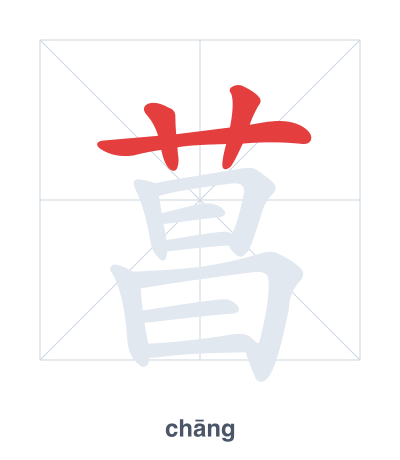
Stroke order practice for 菖 - chāng

Practice Writing 菖 (chāng)

Open Hanzi Writer to see the animated stroke order and practice writing 菖 with real-time feedback.

The character (chāng) is written with 11 strokes. Follow the standard Chinese stroke order: top to bottom, left to right, outside before inside. The radical is one of its key components.

Practice the correct stroke order with the Hanzi Writer app to see animated stroke-by-stroke guidance with real-time feedback.

means calamus; sweet flag.

Character
Pinyinchāng (chang)
Meaningcalamus; sweet flag
Strokes11
Radical
Difficulty4.2/5

菖 is a compound character with the grass radical 艹 indicating a plant, and 昌 (chāng, meaning 'prosperous' or 'bright') as the phonetic and semantic component. 昌 itself combines 日 (sun) and 曰 (to speak), but here it suggests the calamus plant thrives in sunny marshes.

💡 Memory Tip: Imagine a sweet flag plant with tall green leaves growing wildly under a bright sun (昌), its grassy scent filling the air.

chāng pú
sweet flag; calamus
shí chāng pú
grass-leaved sweet flag
chāng pú yè
calamus leaf

菖蒲长在水边。

chāng pú zhǎng zài shuǐ biān

Calamus grows by the water.

这是石菖蒲。

zhè shì shí chāng pú

This is grassleaf sweet flag.

菖蒲叶很长。

chāng pú yè hěn zhǎng

Calamus leaves are very long.

Character Pinyin Strokes Radical
(current) chāng 11
9
níng 9
zhǎ 9
Stroke order practice for 菖 - chāng

Practice Writing 菖 (chāng)

Open Hanzi Writer to see the animated stroke order and practice writing 菖 with real-time feedback.

✨ Animated stroke order · Handwriting recognition · HSK-graded practice · Free to use

Frequently Asked Questions about 菖

菖 is made of the grass radical 艹 on top, showing it is a kind of plant, and 昌 below, which gives the pronunciation chāng. The bottom part 昌 itself means 'prosperous' or 'bright', but here it mainly serves as a phonetic clue.

Characters with Radical 艹

Other 11-Stroke Characters