Hanzi Writer

How to Write 茬 (chá) — Meaning “stubble”

chá 9 strokes Radical: 艹

茬 (chá) means "stubble" in Chinese. It has 9 strokes with the radical 艹.

Rated 4/5 in difficulty (challenging).

Appears in 3+ common words including 找茬 (zhǎo chá), 茬口 (chá kǒu), 麦茬 (mài chá).

Due to its 9 strokes, Hanzi Writer's error detection shows 茬 requires focused practice — most learners need 10+ attempts for consistent accuracy.
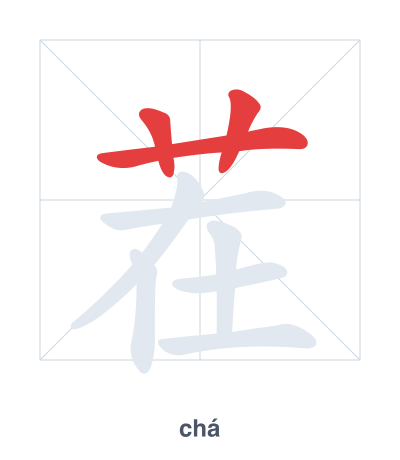
Stroke order practice for 茬 - chá

Practice Writing 茬 (chá)

Open Hanzi Writer to see the animated stroke order and practice writing 茬 with real-time feedback.

The character (chá) is written with 9 strokes. Follow the standard Chinese stroke order: top to bottom, left to right, outside before inside. The radical is one of its key components.

Practice the correct stroke order with the Hanzi Writer app to see animated stroke-by-stroke guidance with real-time feedback.

means stubble.

Character
Pinyinchá (cha)
Meaningstubble
Strokes9
Radical
Difficulty4/5

茬 combines the grass radical 艹 (plants/vegetation) with 在 (zài, 'to be present/at'), suggesting the stubble that remains in the field after crops are harvested. The character depicts 'grass that is still there' after the tops are cut off.

💡 Memory Tip: Picture a field of grass (艹) where the stubble (茬) is still present (在) after the harvesters have passed through.

zhǎo chá
to pick a quarrel; to find fault
chá kǒu
crop rotation
mài chá
Wheat stubble

他总是故意找茬。

tā zǒng shì gù yì zhǎo chá

He is always intentionally picking a fight.

这块地的茬口很好。

zhè kuài dì de chá kǒu hěn hǎo

The stubble on this land is very good.

地里留着麦茬。

dì lǐ liú zhe mài chá

Wheat stubble is left in the field.

Character Pinyin Strokes Radical
(current) chá 9
9
7
7
Stroke order practice for 茬 - chá

Practice Writing 茬 (chá)

Open Hanzi Writer to see the animated stroke order and practice writing 茬 with real-time feedback.

✨ Animated stroke order · Handwriting recognition · HSK-graded practice · Free to use

Frequently Asked Questions about 茬

茬 has the radical 艹 (grass) on top, indicating it relates to plants, and the lower part 在 (zài, "at") gives a phonetic hint. Together, they suggest leftover plant material — specifically, the stubble left after harvesting crops.

Characters with Radical 艹

Other 9-Stroke Characters