熨 (yù/yùn) means "to iron; to press (clothes)" in Chinese. It has 15 strokes with the radical 火.
Rated 4.2/5 in difficulty (advanced).
Appears in 3+ common words including 熨烫 (yùn tàng), 熨斗 (yùn dǒu), 熨帖 (yù tiē).
Due to its 15 strokes, Hanzi Writer's error detection shows 熨 requires focused practice — most learners need 10+ attempts for consistent accuracy.
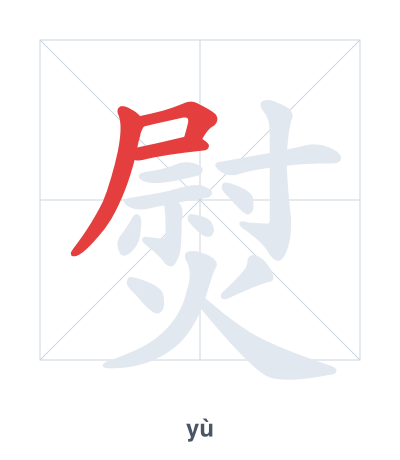
Open Hanzi Writer to see the animated stroke order and practice writing 熨 with real-time feedback.
The character 熨 (yù/yùn) is written with 15 strokes. Follow the standard Chinese stroke order: top to bottom, left to right, outside before inside. The radical 火 is one of its key components.
Practice the correct stroke order with the Hanzi Writer app to see animated stroke-by-stroke guidance with real-time feedback.
熨 means to iron; to press (clothes).
This is a polyphonic character with readings: yù, yùn.
The character 熨 combines the radical 火 (fire) with the component 尉 (yù, originally meaning to press with a heated tool). In ancient form, 尉 depicted a hand holding a hot iron over fabric, so together 熨 conveys the action of using heat and pressure to smooth clothes.
💡 Memory Tip: Imagine a fiery hand (火) pressing down on a wrinkled shirt (尸) with a tool (寸) to make it smooth and flat.
穿上熨烫平整的西装,他显得很有精神。
chuān shàng yùn tàng píng zhěng de xī zhuāng tā xiǎn de hěn yǒu jīng shén
Wearing a neatly ironed suit, he looks very sharp and energetic.
妈妈正用电热熨斗熨烫爸爸的衬衫。
mā mā zhèng yòng diàn rè yùn dǒu yùn tàng bà bà de chèn shān
Mom is ironing Dad's shirt with an electric iron.
这番话说得非常得体,听起来很熨帖。
zhè fān huà shuō dé fēi cháng dé tǐ tīng qǐ lái hěn yù tiē
These words were spoken very appropriately and sound very comforting.
Open Hanzi Writer to see the animated stroke order and practice writing 熨 with real-time feedback.
✨ Animated stroke order · Handwriting recognition · HSK-graded practice · Free to use
The left side is 火 (fire), showing that heat is used. The right side is 尉 (yù), which gives a clue to the pronunciation and also relates to the idea of pressing or smoothing. Together, the character represents using heat to press clothes smooth.