Hanzi Writer

How to Write 棠 (táng) — Meaning “wild apple; crabapple”

táng 12 strokes Radical: 木

棠 (táng) means "wild apple; crabapple" in Chinese. It has 12 strokes with the radical 木.

Rated 4.2/5 in difficulty (advanced).

Appears in 3+ common words including 海棠 (hǎi táng), 海棠果 (hǎi táng guǒ), 秋海棠 (qiū hǎi táng).

Due to its 12 strokes, Hanzi Writer's error detection shows 棠 requires focused practice — most learners need 10+ attempts for consistent accuracy.
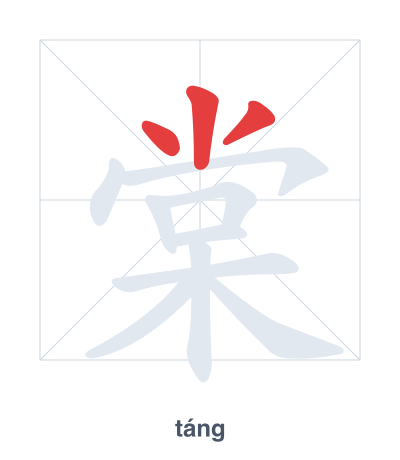
Stroke order practice for 棠 - táng

Practice Writing 棠 (táng)

Open Hanzi Writer to see the animated stroke order and practice writing 棠 with real-time feedback.

The character (táng) is written with 12 strokes. Follow the standard Chinese stroke order: top to bottom, left to right, outside before inside. The radical is one of its key components.

Practice the correct stroke order with the Hanzi Writer app to see animated stroke-by-stroke guidance with real-time feedback.

means wild apple; crabapple.

Character
Pinyintáng (tang)
Meaningwild apple; crabapple
Strokes12
Radical
Difficulty4.2/5

棠 is a phono-semantic compound. The top component 尚 (shàng, meaning 'still' or 'yet') provides a phonetic clue to the pronunciation táng, while the radical 木 (tree) indicates that it refers to a type of tree, the crabapple.

💡 Memory Tip: Imagine a tree (木) with a little roof (尚) sheltering clusters of wild crabapples underneath.

hǎi táng
Begonia / Crabapple
hǎi táng guǒ
Crabapple fruit
qiū hǎi táng
Begonia.

公园里的海棠花开了。

gōng yuán lǐ de hǎi táng huā kāi le

The crabapple flowers in the park are in bloom.

海棠果的味道酸酸甜甜。

hǎi táng guǒ de wèi dào suān suān tián tián

Crabapples taste sweet and sour.

奶奶在阳台种了秋海棠。

nǎi nǎi zài yáng tái zhǒng le qiū hǎi táng

Grandma planted begonias on the balcony.

Character Pinyin Strokes Radical
(current) táng 12
chái 10
shuān 10
qī / xī 10
Stroke order practice for 棠 - táng

Practice Writing 棠 (táng)

Open Hanzi Writer to see the animated stroke order and practice writing 棠 with real-time feedback.

✨ Animated stroke order · Handwriting recognition · HSK-graded practice · Free to use

Frequently Asked Questions about 棠

棠 is made of 木 (wood/tree) on top and 尚 (shàng, meaning 'still' or 'yet') below. The 木 radical shows it is a type of tree, while 尚 provides the sound and hints at the crabapple's elegant appearance.

Characters with Radical 木

Other 12-Stroke Characters