Hanzi Writer

How to Write 襢 (tǎn)

襢 (tǎn) means "to bare (one's chest or shoulder)" in Chinese. It has 18 strokes with the radical 衤. Difficulty: 4.2/5.

tǎn
18 strokes Radical: 衤 Difficulty: 4.2/5

to bare (one's chest or shoulder)

How to Write 襢

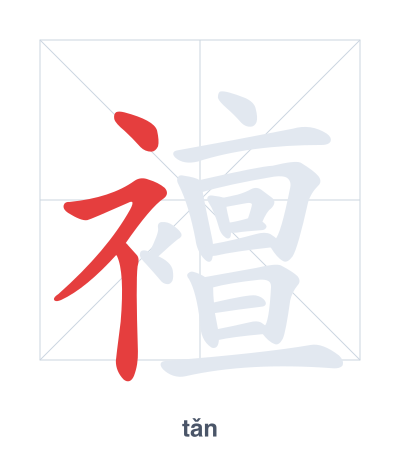
The character (tǎn) is written with 18 strokes. Follow the standard Chinese stroke order: top to bottom, left to right, outside before inside. The radical is one of its key components.

Practice the correct stroke order with the Hanzi Writer app to see animated stroke-by-stroke guidance with real-time feedback.

Meaning & Pronunciation

is pronounced tǎn in Mandarin Chinese. It means to bare (one's chest or shoulder).

Common Words with 襢

襢裼 tǎn tì
to bare the upper body or to be stripped to the waist
襢衣 tǎn yī
unlined garment or thin clothing
襢免 tǎn miǎn
to bare the shoulder and wear a mourning headband (ancient rite)

Example Sentences

他襢裼着上身。

tā tǎn tì zhe shàng shēn

He was bare-chested.

这是古代的一种襢衣。

zhè shì gǔ dài de yī zhǒng tǎn yī

This is a type of ancient unlined garment.

襢免是古代的礼节。

tǎn miǎn shì gǔ dài de lǐ jié

Zhanmian (baring the shoulder and removing the cap) was an ancient etiquette.

Similar Characters

zhě
qiǎng
jīn
Stroke order practice for 襢 - tǎn

Practice Writing 襢 (tǎn)

Open Hanzi Writer to see the animated stroke order and practice writing 襢 with real-time feedback.

Frequently Asked Questions about 襢

Related Characters