Hanzi Writer

How to Write 祟 (suì) — Meaning “Evil spirit; to haunt”

suì 10 strokes Radical: 示

祟 (suì) means "Evil spirit; to haunt" in Chinese. It has 10 strokes with the radical 示.

Rated 4.2/5 in difficulty (advanced).

Appears in 3+ common words including 作祟 (zuò suì), 鬼鬼祟祟 (guǐ guǐ suì suì), 邪祟 (xié suì).

Due to its 10 strokes, Hanzi Writer's error detection shows 祟 requires focused practice — most learners need 10+ attempts for consistent accuracy.
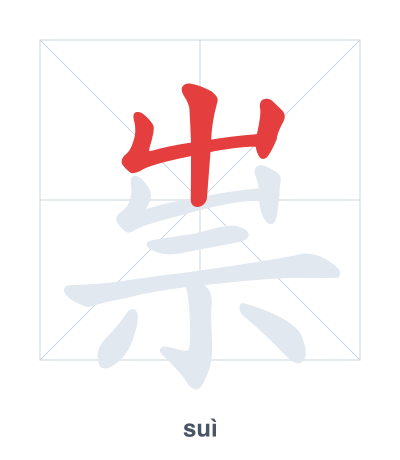
Stroke order practice for 祟 - suì

Practice Writing 祟 (suì)

Open Hanzi Writer to see the animated stroke order and practice writing 祟 with real-time feedback.

The character (suì) is written with 10 strokes. Follow the standard Chinese stroke order: top to bottom, left to right, outside before inside. The radical is one of its key components.

Practice the correct stroke order with the Hanzi Writer app to see animated stroke-by-stroke guidance with real-time feedback.

means Evil spirit; to haunt.

Character
Pinyinsuì (sui)
MeaningEvil spirit; to haunt
Strokes10
Radical
Difficulty4.2/5

祟 combines the radical 示 (spirit/altar) with 出 (to exit/emerge), depicting a spirit emerging from an altar to haunt. The visual form shows something that comes out of the spiritual realm to cause mischief or evil.

💡 Memory Tip: Imagine a mischievous spirit (示) popping out (出) of a box to scare you—that's a 祟 haunting!

zuò suì
to haunt; to cause trouble
guǐ guǐ suì suì
Sneaky
xié suì
Evil spirit / Ghostly influence

是谁在暗中作祟?

shì shuí zài àn zhōng zuò suì

Who is making trouble behind the scenes?

他总是鬼鬼祟祟的。

tā zǒng shì guǐ guǐ suì suì de

He is always being sneaky.

古人迷信邪祟。

gǔ rén mí xìn xié suì

Ancient people were superstitious about evil spirits.

Character Pinyin Strokes Radical
(current) suì 10
suàn 10
piào 11
11
Stroke order practice for 祟 - suì

Practice Writing 祟 (suì)

Open Hanzi Writer to see the animated stroke order and practice writing 祟 with real-time feedback.

✨ Animated stroke order · Handwriting recognition · HSK-graded practice · Free to use

Frequently Asked Questions about 祟

祟 is made of two parts: the top is 出 (meaning to go out) and the bottom is 示 (meaning spirit or altar). Together, they suggest a spirit coming out from an altar to cause harm, which matches the meaning of 'evil spirit' or 'to haunt'.

Characters with Radical 示

Other 10-Stroke Characters