Hanzi Writer

How to Write 孬 (nāo) — Meaning “bad / weak”

nāo 10 strokes Radical: 子

孬 (nāo) means "bad / weak" in Chinese. It has 10 strokes with the radical 子.

Rated 3.9/5 in difficulty (challenging).

Appears in 3+ common words including 孬好 (nāo hǎo), 孬种 (nāo zhǒng), 孬人 (nāo rén).

Due to its 10 strokes, Hanzi Writer's error detection shows 孬 requires focused practice — most learners need 10+ attempts for consistent accuracy.
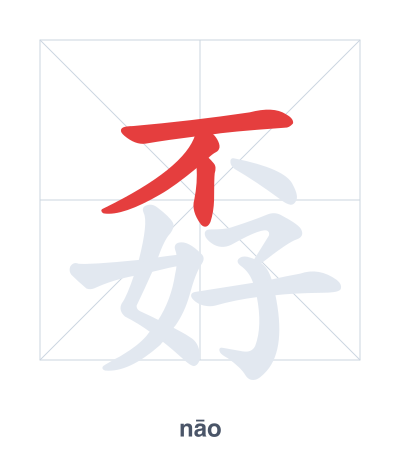
Stroke order practice for 孬 - nāo

Practice Writing 孬 (nāo)

Open Hanzi Writer to see the animated stroke order and practice writing 孬 with real-time feedback.

The character (nāo) is written with 10 strokes. Follow the standard Chinese stroke order: top to bottom, left to right, outside before inside. The radical is one of its key components.

Practice the correct stroke order with the Hanzi Writer app to see animated stroke-by-stroke guidance with real-time feedback.

means bad / weak.

Character
Pinyinnāo (nao)
Meaningbad / weak
Strokes10
Radical
Difficulty3.9/5

孬 is a compound character combining 不 (bù, meaning 'not') above 子 (zǐ, meaning 'child'). The visual structure literally suggests 'not a good child,' pointing to something inferior, weak, or bad. This clever assembly conveys the concept of deficiency or lack of quality through the idea of a disappointing offspring.

💡 Memory Tip: Imagine a child (子) who cannot (不) even lift a toy, making them weak and bad at playing.

nāo hǎo
quality / good or bad
nāo zhǒng
coward / weakling
nāo rén
bad person / coward

别管孬好,先拿着。

bié guǎn nāo hǎo xiān ná zhe

Regardless of the quality, take it first.

他不是个孬种。

tā bú shì gè nāo zhǒng

He is not a coward or a weakling.

这种事只有孬人才做。

zhè zhǒng shì zhǐ yǒu nāo rén cái zuò

Only a bad person would do such a thing.

Character Pinyin Strokes Radical
(current) nāo 10
mèng 8
bāo 8
8
Stroke order practice for 孬 - nāo

Practice Writing 孬 (nāo)

Open Hanzi Writer to see the animated stroke order and practice writing 孬 with real-time feedback.

✨ Animated stroke order · Handwriting recognition · HSK-graded practice · Free to use

Frequently Asked Questions about 孬

孬 is made of 不 (bù, not) on top and 好 (hǎo, good) on the bottom. Combining "not" and "good" gives the meaning "bad" or "weak." This is a common logic: putting 不 above 好 directly shows something is not good.

Characters with Radical 子

Other 10-Stroke Characters