瓴 (líng) means "roof tile" in Chinese. It has 9 strokes with the radical 瓦.
Rated 4/5 in difficulty (challenging).
Appears in 3+ common words including 高屋建瓴 (gāo wū jiàn líng), 瓦瓴 (wǎ líng), 瓴甋 (líng dì).
Due to its 9 strokes, Hanzi Writer's error detection shows 瓴 requires focused practice — most learners need 10+ attempts for consistent accuracy.
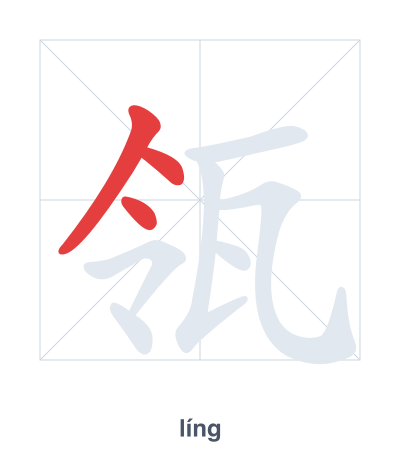
Open Hanzi Writer to see the animated stroke order and practice writing 瓴 with real-time feedback.
The character 瓴 (líng) is written with 9 strokes. Follow the standard Chinese stroke order: top to bottom, left to right, outside before inside. The radical 瓦 is one of its key components.
Practice the correct stroke order with the Hanzi Writer app to see animated stroke-by-stroke guidance with real-time feedback.
瓴 means roof tile.
| Character | 瓴 |
| Pinyin | líng (ling) |
| Meaning | roof tile |
| Strokes | 9 |
| Radical | 瓦 |
| Difficulty | 4/5 |
瓴 is a phono-semantic compound: the radical 瓦 (tile) provides the meaning of 'roof tile', while 令 (líng) gives the sound. The character thus visually represents a tile shaped like the phonetic component.
💡 Memory Tip: Picture a roof tile with a command (令) written on it, used to signal when it's time to fix the roof.
他的分析高屋建瓴。
tā de fēn xī gāo wū jiàn líng
His analysis is strategically insightful.
屋顶上有许多瓦瓴。
wū dǐng shàng yǒu xǔ duō wǎ líng
There are many tiles on the roof ridge.
这里的瓴甋很古老。
zhè lǐ de líng dì hěn gǔ lǎo
The bricks and tiles here are very old.
Open Hanzi Writer to see the animated stroke order and practice writing 瓴 with real-time feedback.
✨ Animated stroke order · Handwriting recognition · HSK-graded practice · Free to use
瓴 is a left-right pictophonetic character. The left part 令 (líng) provides the sound, while the right radical 瓦 (wǎ, meaning 'tile') gives the meaning. Together, they create a character that represents a type of tile used on roofs.