Hanzi Writer

How to Write 楝 (liàn)

楝 (liàn) means "chinaberry" in Chinese. It has 13 strokes with the radical 木. Difficulty: 4.2/5.

liàn
13 strokes Radical: 木 Difficulty: 4.2/5

chinaberry

How to Write 楝

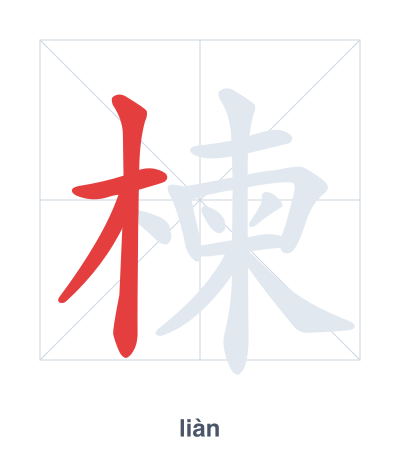
The character (liàn) is written with 13 strokes. Follow the standard Chinese stroke order: top to bottom, left to right, outside before inside. The radical is one of its key components.

Practice the correct stroke order with the Hanzi Writer app to see animated stroke-by-stroke guidance with real-time feedback.

Meaning & Pronunciation

is pronounced liàn in Mandarin Chinese. It means chinaberry.

Common Words with 楝

楝树 liàn shù
chinaberry tree
苦楝 kǔ liàn
Chinaberry tree
楝花 liàn huā
chinaberry flower

Example Sentences

路边有一棵楝树。

lù biān yǒu yī kē liàn shù

There is a chinaberry tree by the roadside.

苦楝的叶子很绿。

kǔ liàn de yè zi hěn lǜ

The leaves of the chinaberry tree are very green.

楝花在春天开放。

liàn huā zài chūn tiān kāi fàng

Chinaberry flowers bloom in spring.

Similar Characters

suō
po
Stroke order practice for 楝 - liàn

Practice Writing 楝 (liàn)

Open Hanzi Writer to see the animated stroke order and practice writing 楝 with real-time feedback.

Frequently Asked Questions about 楝

Related Characters