琅 (láng) means "Jade-like stone" in Chinese. It has 11 strokes with the radical 王.
Rated 4.2/5 in difficulty (advanced).
Appears in 3+ common words including 琳琅 (lín láng), 琅琅 (láng láng), 琅琊 (láng yá).
Due to its 11 strokes, Hanzi Writer's error detection shows 琅 requires focused practice — most learners need 10+ attempts for consistent accuracy.
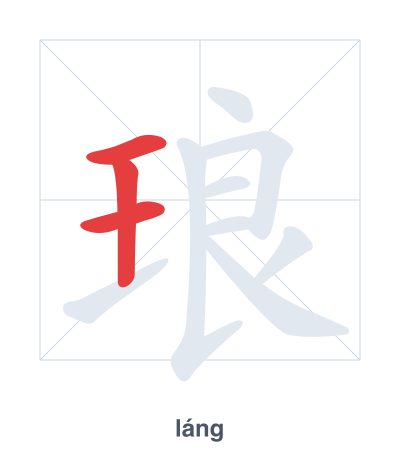
Open Hanzi Writer to see the animated stroke order and practice writing 琅 with real-time feedback.
The character 琅 (láng) is written with 11 strokes. Follow the standard Chinese stroke order: top to bottom, left to right, outside before inside. The radical 王 is one of its key components.
Practice the correct stroke order with the Hanzi Writer app to see animated stroke-by-stroke guidance with real-time feedback.
琅 means Jade-like stone.
琅 combines the jade radical 王 (originally a string of jade beads) with 良 (liáng, 'good'), which provides the sound and suggests fine quality. Together, they depict a precious stone resembling jade but not quite as valuable.
💡 Memory Tip: Imagine a king (王) admiring a fine (良) shiny stone, calling it 'jade-like' but not real jade.
琳琅满目。
lín láng mǎn mù
A dazzling display of beautiful things.
读书声琅琅。
dú shū shēng láng láng
The sound of reading is loud and clear.
琅琊榜好看。
láng yá bǎng hǎo kàn
Nirvana in Fire is a good show.
Open Hanzi Writer to see the animated stroke order and practice writing 琅 with real-time feedback.
✨ Animated stroke order · Handwriting recognition · HSK-graded practice · Free to use
琅 is composed of the radical 王 (jade) on the left and 良 on the right. The radical 王 indicates that the character relates to jade or precious stones, so 琅 means a jade-like stone. The right part 良 contributes to pronunciation and also means 'good' or 'fine,' reinforcing the idea of a high-quality stone.