玎 (dīng) means "Jingling sound (of jade)" in Chinese. It has 6 strokes with the radical 王.
Rated 3.2/5 in difficulty (challenging).
Appears in 3+ common words including 玎玲 (dīng líng), 玎当 (dīng dāng), 玎玎 (dīng dīng).
Due to its 6 strokes, Hanzi Writer's error detection shows 玎 requires focused practice — most learners need 10+ attempts for consistent accuracy.
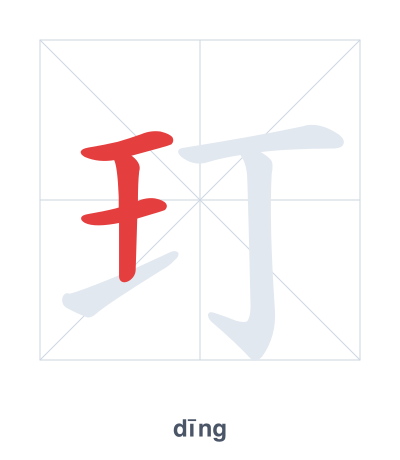
Open Hanzi Writer to see the animated stroke order and practice writing 玎 with real-time feedback.
The character 玎 (dīng) is written with 6 strokes. Follow the standard Chinese stroke order: top to bottom, left to right, outside before inside. The radical 王 is one of its key components.
Practice the correct stroke order with the Hanzi Writer app to see animated stroke-by-stroke guidance with real-time feedback.
玎 means Jingling sound (of jade).
玎 combines the jade radical 王 (three pieces of jade strung together) with 丁 (a nail or spike), which gives the sound. Together, they depict the clear, sharp 'ding' sound made when jade pieces strike each other.
💡 Memory Tip: Picture a jade ornament (王) hitting a metal nail (丁) and making a crisp 'ding' sound.
铃声玎玲响。
líng shēng dīng líng xiǎng
The bell is tinkling.
碗筷发出玎当声。
wǎn kuài fā chū dīng dāng shēng
The bowls and chopsticks made a clinking sound.
泉水玎玎地流。
quán shuǐ dīng dīng dì liú
The spring water flows with a tinkling sound.
Open Hanzi Writer to see the animated stroke order and practice writing 玎 with real-time feedback.
✨ Animated stroke order · Handwriting recognition · HSK-graded practice · Free to use
玎 is composed of the radical 王 (jade) on the left and the phonetic component 丁 (dīng) on the right. The 王 radical indicates the character relates to jade, and 丁 provides the sound, together creating the meaning of a jingling sound made by jade pieces striking each other.