How to Write 袴 (kù) — Meaning “Trousers (archaic variant of 裤)”
kù
11 strokes
Radical: 衤
袴 (kù) means "Trousers (archaic variant of 裤)" in Chinese. It has 11 strokes with the radical 衤.
Rated 4.2/5 in difficulty (advanced).
Appears in 3+ common words including 袴褶 (kù zhě), 袴子 (kù zi), 连袴 (lián kù).
Due to its 11 strokes, Hanzi Writer's error detection shows 袴 requires focused practice — most learners need 10+ attempts for consistent accuracy.
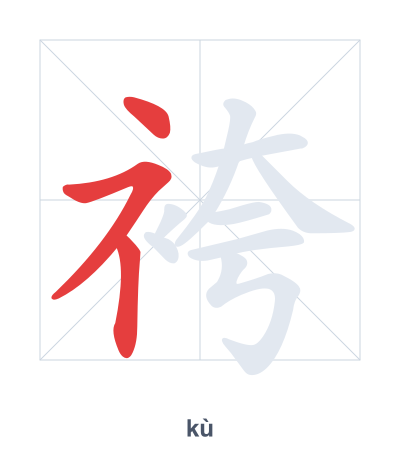
Practice Writing 袴 (kù)
Open Hanzi Writer to see the animated stroke order and practice writing 袴 with real-time feedback.