Hanzi Writer

How to Write 怙 (hù)

怙 (hù) means "to rely on; to depend on" in Chinese. It has 8 strokes with the radical 忄. Difficulty: 3.7/5.

8 strokes Radical: 忄 Difficulty: 3.7/5

to rely on; to depend on

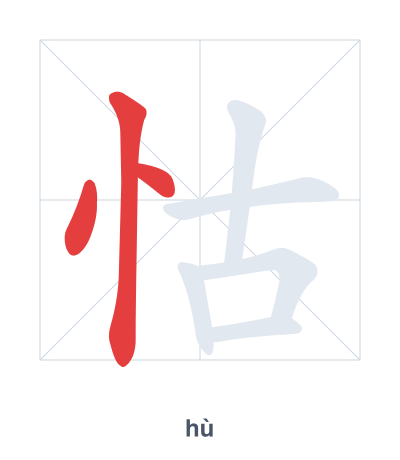
How to Write 怙

The character (hù) is written with 8 strokes. Follow the standard Chinese stroke order: top to bottom, left to right, outside before inside. The radical is one of its key components.

Practice the correct stroke order with the Hanzi Writer app to see animated stroke-by-stroke guidance with real-time feedback.

Meaning & Pronunciation

is pronounced in Mandarin Chinese. It means to rely on; to depend on.

Common Words with 怙

怙恶不悛 hù è bù quān
to persist in evil and refuse to reform
恃怙 shì hù
To rely on (often referring to parents)
怙宠 hù chǒng
to rely on being a favorite

Example Sentences

这个人怙恶不悛。

zhè ge rén hù è bù quān

This person is incorrigible and refuses to reform.

父母是孩子的恃怙。

fù mǔ shì hái zi de shì hù

Parents are the ones children rely on for support.

他不能怙宠而骄。

tā bù néng hù chǒng ér jiāo

He shouldn't be arrogant because of being favored.

Similar Characters

chàn
shì
cǔn
Stroke order practice for 怙 - hù

Practice Writing 怙 (hù)

Open Hanzi Writer to see the animated stroke order and practice writing 怙 with real-time feedback.

Frequently Asked Questions about 怙

Related Characters