Hanzi Writer

How to Write 惚 (hū)

惚 (hū) means "absent-minded; indistinct" in Chinese. It has 11 strokes with the radical 忄. Difficulty: 4.2/5.

11 strokes Radical: 忄 Difficulty: 4.2/5

absent-minded; indistinct

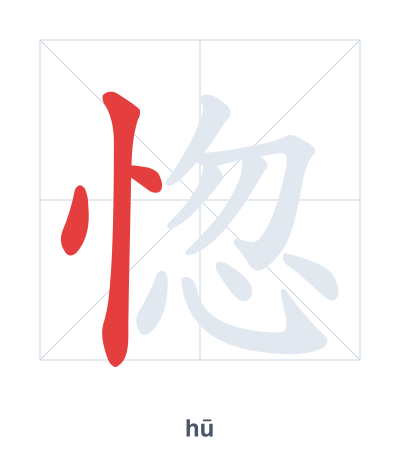
How to Write 惚

The character (hū) is written with 11 strokes. Follow the standard Chinese stroke order: top to bottom, left to right, outside before inside. The radical is one of its key components.

Practice the correct stroke order with the Hanzi Writer app to see animated stroke-by-stroke guidance with real-time feedback.

Meaning & Pronunciation

is pronounced in Mandarin Chinese. It means absent-minded; indistinct.

Common Words with 惚

恍惚 huǎng hū
Absent-minded; in a trance; blurred
惚恍 hū huǎng
dim; indistinct
惚怳 hū huǎng
blurred; in a trance

Example Sentences

他精神有些恍惚。

tā jīng shén yǒu xiē huǎng hū

He was a bit absent-minded.

梦境总是惚恍的。

mèng jìng zǒng shì hū huǎng de

Dreamscapes are always hazy and indistinct.

他的神情有些惚怳。

tā de shén qíng yǒu xiē hū huǎng

His expression is somewhat dazed.

Similar Characters

xún
shì
huǎng
Stroke order practice for 惚 - hū

Practice Writing 惚 (hū)

Open Hanzi Writer to see the animated stroke order and practice writing 惚 with real-time feedback.

Frequently Asked Questions about 惚

Related Characters