蛄 (gū) means "Mole cricket (character component)" in Chinese. It has 11 strokes with the radical 虫.
Rated 4.2/5 in difficulty (advanced).
Appears in 3+ common words including 蝼蛄 (lóu gū), 蛄蝼 (gū lóu), 抓蛄 (zhuā gū).
Due to its 11 strokes, Hanzi Writer's error detection shows 蛄 requires focused practice — most learners need 10+ attempts for consistent accuracy.
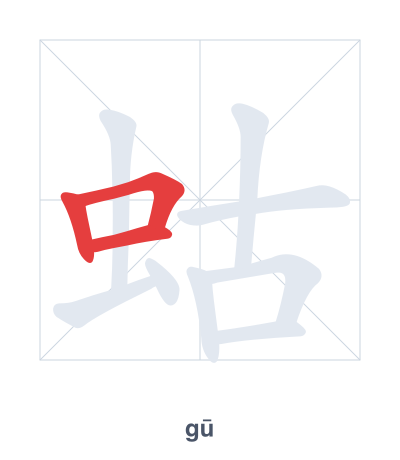
Open Hanzi Writer to see the animated stroke order and practice writing 蛄 with real-time feedback.
The character 蛄 (gū) is written with 11 strokes. Follow the standard Chinese stroke order: top to bottom, left to right, outside before inside. The radical 虫 is one of its key components.
Practice the correct stroke order with the Hanzi Writer app to see animated stroke-by-stroke guidance with real-time feedback.
蛄 means Mole cricket (character component).
蛄 is a phono-semantic compound: the radical 虫 (insect) indicates it is a type of insect, while the component 古 (gǔ) provides a phonetic hint for the pronunciation of the whole character. The mole cricket is a burrowing insect, and the ancient-looking 古 component evokes the cricket's primitive, soil-dwelling nature.
💡 Memory Tip: Picture an ancient (古) insect (虫) with oversized front claws, tunneling underground like a miniature mole.
蝼蛄在土里。
lóu gū zài tǔ lǐ
The mole cricket is in the soil.
这种虫子叫蛄蝼。
zhè zhǒng chóng zi jiào gū lóu
This insect is called a mole cricket.
弟弟在抓蝼蛄。
dì di zài zhuā lóu gū
Little brother is catching mole crickets.
Open Hanzi Writer to see the animated stroke order and practice writing 蛄 with real-time feedback.
✨ Animated stroke order · Handwriting recognition · HSK-graded practice · Free to use
蛄 is a phono-semantic compound: the left side 虫 (insect radical) shows it is an insect, and the right side 古 (gǔ) gives a hint to its pronunciation gū, though the tone differs. Together they form a character meaning "mole cricket," a type of insect.